Glass Cutting Machinery: Engineering Principles, Automation Workflows, and Industrial Selection Guide
- By:LiaoDA
- Date:2026-10-26
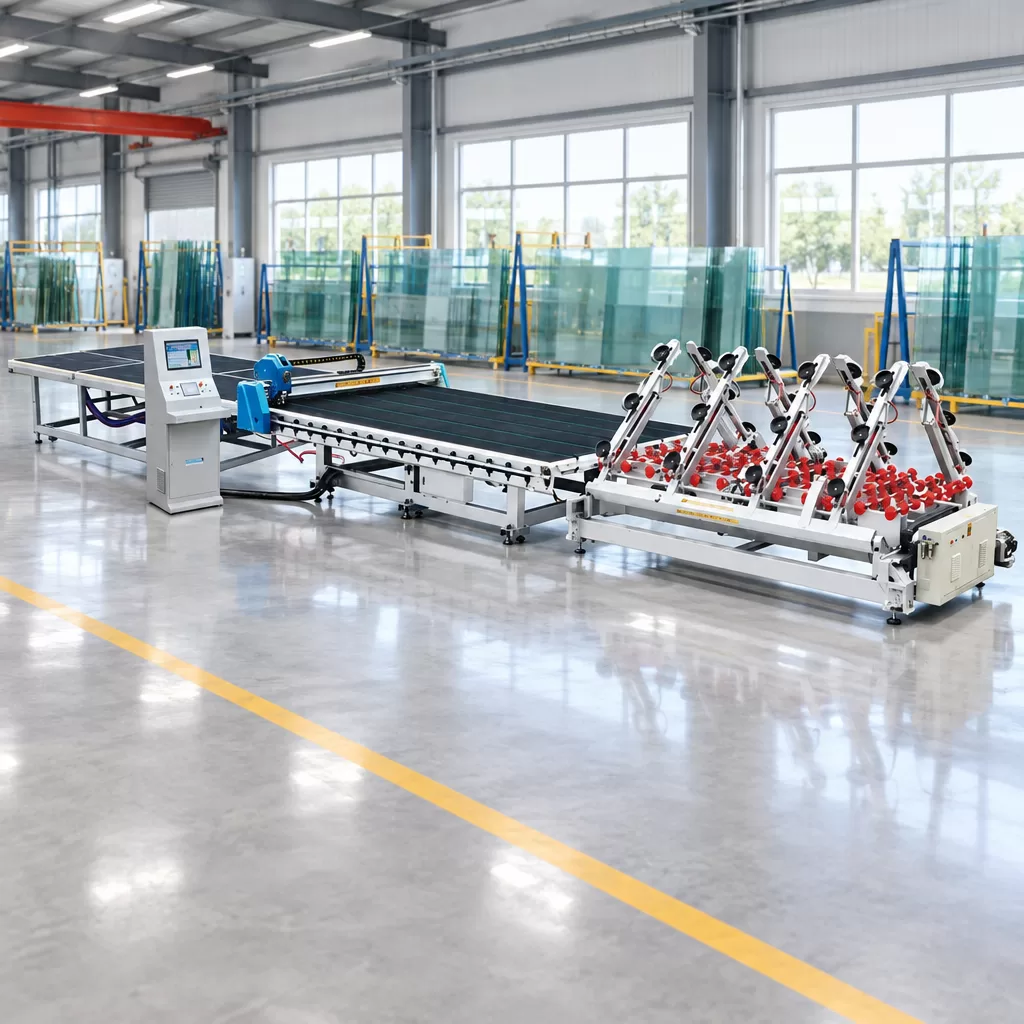
Walk onto the floor of a commercial glazing plant, and you immediately hear the cullet bin. Every crash of rejected float glass signals lost margin, wasted energy, and delayed facade deliveries. Selecting industrial glass cutting machinery is rarely about buying the fastest motor on paper; instead, plant managers use automated CNC glass cutting machinery and integrated glass cutting production line systems to stabilize edge quality before panes ever reach the tempering furnace.
When raw sheets move from storage racks to processing tables, tiny mechanical errors multiply rapidly. A slight wobble in the gantry or an inconsistent pneumatic cylinder turns an expensive jumbo sheet into scrap. Understanding how mechanical mass, motion control, and fracture physics interact helps fabrication teams eliminate these hidden production bottlenecks.
The Physics of Industrial Glass Separation: Why Cutting Is Actually Controlled Fracture
Many buyers outside the flat glass sector assume a cutting bridge saws through silica like a wood router. In reality, industrial glass cutting machinery does not remove material to separate a sheet. Instead, a contoured tungsten carbide or diamond wheel rolls across the surface to initiate a controlled vertical fracture.
Median Cracks and Edge Quality in Float Glass
As the cutting wheel presses into soda-lime silicate float glass, it creates a median crack that extends downward into the sheet. Bending force applied during the breaking stage propagates that crack through the remaining thickness to separate the glass. The goal of precision CNC control is to create a consistent initial crack without damaging the top surface.
When downward pressure is excessive or poorly regulated during scoring, the result can be lateral vents, chips, or shark-tooth edge defects adjacent to the score line. These flaws weaken the finished edge and make later seaming or grinding harder to control. Poor cut-edge quality can also increase the risk of breakage during heat treatment, so edge inspection after cutting deserves the same attention as dimensional checks.
Managing Thickness Variations from 3mm Panes to 19mm Structural Plates
Float glass behaves differently as its cross-section changes. According to the manufacturer's specifications, the YD-CTL series is engineered to process glass thicknesses ranging from 3 mm to 19 mm. A 3 mm picture-frame sheet flexes easily under light pressure, whereas a 19 mm heavy structural plate resists bending and demands different scoring parameters. Choosing a line for mixed-thickness work therefore means looking beyond the headline size range and asking how setup changes between thin and thick sheets.
Furthermore, mass scales quickly with thickness because soda-lime float glass weighs roughly 2.5 kilograms per square meter for every millimeter of thickness. While a 3 mm sheet weighs only 7.5 kilograms per square meter, a 19 mm plate reaches 47.5 kilograms per square meter. Consequently, scoring and breaking setups must be adjusted appropriately for different thicknesses.
Machine Weight and Cutting Precision
Vibration during high-speed cutting is a general factor that depends on machine design and operating conditions. Lighter frames can flex and vibrate when executing sharp corners or tight arcs, which may cause the cutting wheel to skip across the glass surface if not properly controlled.
Depending on the model and bed footprint, the YD-CTL series weighs between 8,000 kilograms and 12,000 kilograms, as listed in its technical data. The system is specified with a cutting precision of ±0.3 mm. These two figures are listed separately, so buyers who care about vibration behavior or floor loading should ask the supplier for frame details and installation requirements before committing.
Core Architecture of an Automated CNC Glass Cutting Production Line
Standalone cutting tables still exist in small repair shops, yet high-volume architectural and appliance glass plants cannot afford manual bottlenecks. An integrated CNC glass cutting machine production line links three stations, automatic loading, CNC cutting, and breaking, into one workflow. Each station hands the sheet to the next, which reduces the waiting and lifting that usually accumulate between separate machines.
Stage 1: Multi-Arm Automatic Loading and Raw Sheet Handling
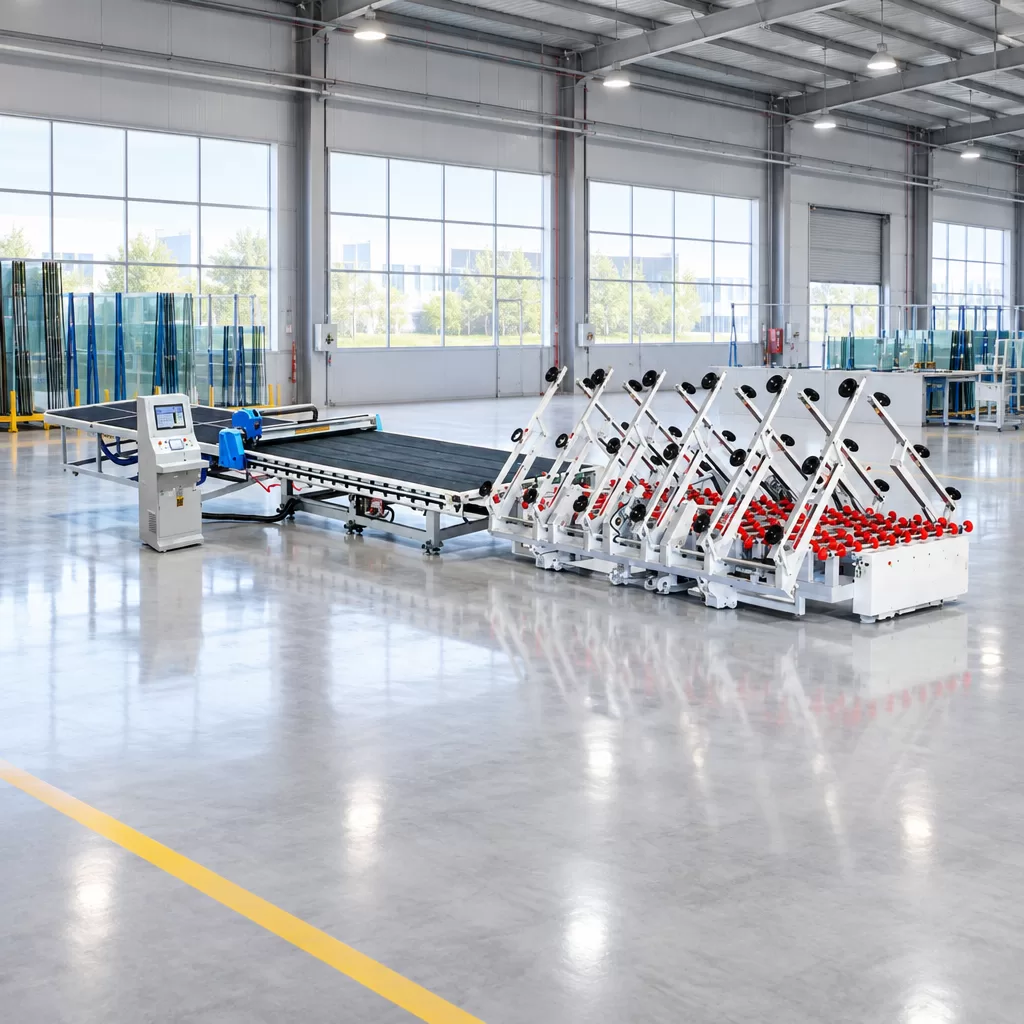
Manual handling of raw float glass is one of the highest-risk operations in a fabrication facility. A standard jumbo sheet measuring 6,000 by 3,210 millimeters at 6 mm thickness weighs nearly 290 kilograms, making manual lifting both hazardous and prone to flexural breakage. The first module of the YD-CTL production line addresses this through a multi-arm automatic glass loading system.
The loading section pictured in the product images uses a multi-arm layout with suction cups. Buyers should confirm with the supplier the exact arm configuration, suction cup type, and pneumatic details for the offered model. In general, a loader of this kind lifts the raw sheet and places it onto the cutting table at a working table height of 900±25 mm, which helps limit manual handling before cutting begins.
Stage 2: High-Speed CNC Scoring and Gantry Kinematics
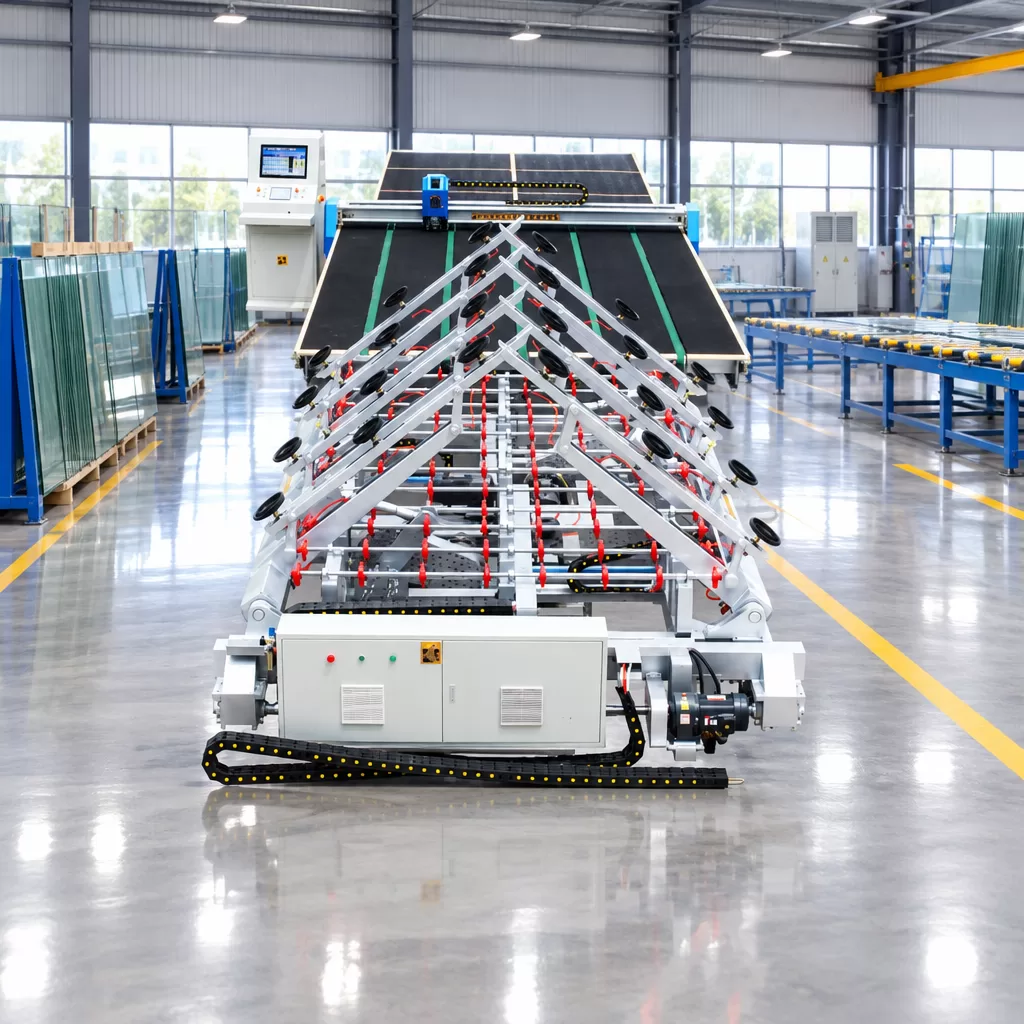
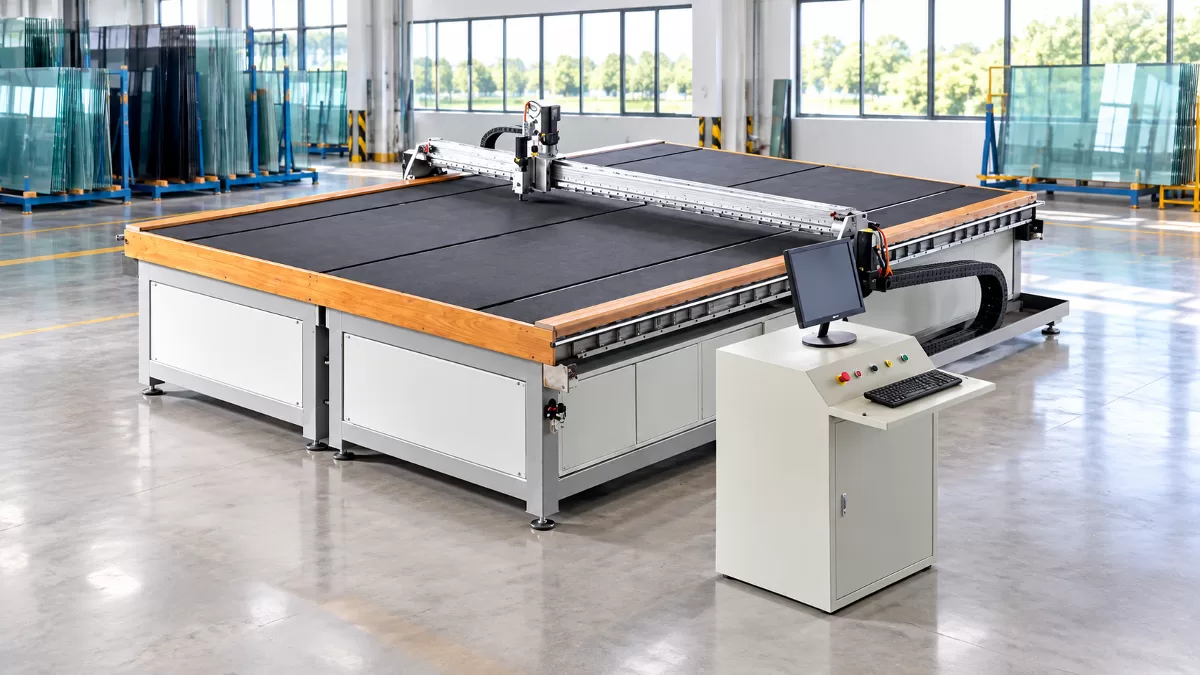
Once the raw sheet is positioned on the felt-like work surface, the CNC system executes the cutting pattern along the gantry bridge. The YD-CTL series lists a cutting precision of ±0.3 mm, a minimum cutting size of 100×100 mm, and a maximum cutting speed of 120 m/min. These are separate listed specifications, so actual results on a given job depend on glass thickness, pattern complexity, and setup.
Whether the batch calls for rectangular insulating glass lites or intricate artistic curves, the product data describes the line as suited to both construction components and decorative pieces. Details such as edge-detection sensors, cutting-head controls, and software options are not specified in the supplied data, so buyers should confirm them with the supplier for their configuration.
Stage 3: Breaking Table and Glass Separation
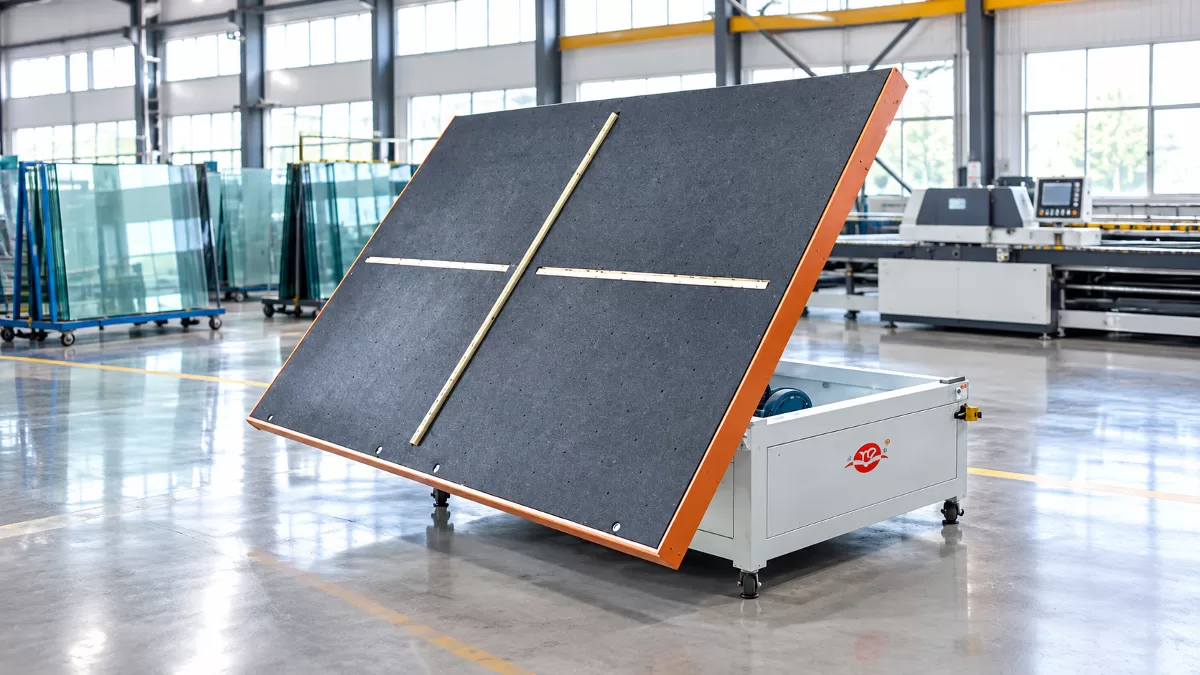
Scoring the glass is only half of the separation process. After cutting, the sheet moves to the breaking table, where the scored lines are opened into finished pieces. The YD-CTL production line includes a specialized breaking table for this step, which completes the workflow from raw sheet to finished cut piece as described in the product data.
In general glass processing, separation is achieved by applying controlled bending force along the score lines so that the median crack extends through the remaining thickness. When score quality is good, this leaves an edge that can proceed to double-edging or seaming. The product data confirms a breaking table but does not detail its mechanism, so buyers should confirm the breaking-table configuration, including any air flotation or tilting features, with the supplier.
Technical Comparison: Matching Production Line Models to Sheet Formats
Float glass manufacturers supply raw stock in standardized regional formats, ranging from split DLF sheets (typically 3,210×2,250 mm) to full jumbo PLF plates (6,000×3,210 mm). Selecting a machine bed that is either too small for available float stock or oversized for the factory building wastes capital and floor space. Matching the bed to the stock you actually buy keeps both trimming waste and idle floor area under control.
Comparing the YD-CTL Series Specifications
To accommodate different plant footprints and stock formats, LIAODA (LAD) Glass Machinery Co., Ltd., operating from Foshan City under the Yuanda brand and supplying customers across more than 100 countries and regions since its early roots in the 1990s, manufactures the YD-CTL line in three distinct size configurations. For us, matching bed dimensions to your raw sheet supply is the first step in system layout.
| Technical Parameter | YD-CTL-4228 | YD-CTL-5133 | YD-CTL-6133 |
|---|---|---|---|
| Maximum Glass Size (mm) | 4200 × 2800 | 5100 × 3300 | 6100 × 3300 |
| Minimum Cutting Size (mm) | 100 × 100 | 100 × 100 | 100 × 100 |
| Glass Thickness Range (mm) | 3 ~ 19 | 3 ~ 19 | 3 ~ 19 |
| Cutting Precision (mm) | ±0.3 | ±0.3 | ±0.3 |
| Maximum Cutting Speed (m/min) | 120 | 120 | 120 |
| Working Table Height (mm) | 900 ± 25 | 900 ± 25 | 900 ± 25 |
| Total Machine Weight (kg) | 8000 | 10000 | 12000 |
Architectural Curtain Walls vs. Decorative and Artistic Glass Processing
Different market segments place vastly different demands on the same piece of automatic glass cutting machinery. High-volume architectural processors running the YD-CTL-6133 can accommodate sheets up to 6,100×3,300 mm. Nesting yield depends on sheet layout, panel dimensions, and optimization software; the larger bed size provides more flexibility for efficient material usage.
Conversely, interior decorative and furniture glass fabricators often favor the compact 4,200×2,800 mm footprint of the YD-CTL-4228. Their production schedules revolve around short runs, frequent thickness changes between 4 mm mirror stock and 12 mm tabletops, and complex geometric templates that test the interpolative accuracy of the CNC software.
Step-by-Step Selection Framework for Glass Fabrication Facilities
Purchasing an automated cutting line requires aligning mechanical specifications with upstream storage logistics and downstream processing capacities. Follow this structured three-step decision sequence when evaluating equipment proposals. Each step turns a specification line into a question that can be tested before purchase.
-
Audit raw stock dimensions and thickness mix: Calculate the percentage of orders that require sheets larger than 4,200×2,800 mm. If your supply chain delivers lower-cost jumbo sheets at 6,000×3,210 mm, choosing the YD-CTL-6133 with its 6,100×3,300 mm capacity can open the door to bulk material pricing and greater nesting flexibility.
-
Verify actual cut-edge quality through trials: Check the entry tolerances of your double-edgers, CNC machining centers, and tempering furnaces. Conduct sample runs with the machine to confirm that actual cut-edge quality meets your downstream process requirements before making grinding-allowance or process-speed decisions. Record edge condition and dimensional results for each thickness you plan to run.
-
Verify floor slab loading and conveyor line heights: Inspect the reinforced concrete foundation where the line will sit. A machine weighing between 8,000 kg and 12,000 kg plus several tons of stacked glass requires a level, load-rated slab, while its 900±25 mm table height must align with any adjacent washing or sorting conveyors.
Operational Best Practices to Maximize Yield and Equipment Lifespan
Even a heavy CNC gantry can drift out of tolerance if daily shop-floor variables are neglected. Establishing consistent preventive routines protects the mechanical components and the surface quality of coated or Low-E glass. Treat the manufacturer's maintenance instructions as the baseline, then add the practical habits below to give your maintenance team a record to compare against when problems appear.
-
Cutting fluid application: Use the scoring fluid specified for your cutting wheel and machine. Follow the manufacturer's fluid recommendations and verify flow before every shift to support consistent scoring and breakout. Dry or uneven scoring is easy to overlook, so add the check to a start-of-shift list and record any irregularities.
-
Felt surface cleaning and cullet removal: Microscopic glass splinters trapped in the felt worktop can act like abrasive grit under the next raw sheet, risking scratches on delicate soft-coat Low-E surfaces during positioning. Vacuuming and brushing the felt bed between batch runs helps prevent costly surface rejects.
-
Loading system inspection: If the loading section uses vacuum suction cups, as pictured in the product images, wipe them regularly and check for wear, since talc or interleaving powder from raw glass packs can reduce grip. Inspect any pneumatic lines and pressure gauges according to the manufacturer's instructions to help maintain consistent handling of heavy plates.
-
Motion component maintenance: Clean and lubricate motion components such as guides and drives according to the manufacturer's maintenance instructions. Fine glass dust is common on cutting lines, so schedule cleaning intervals with that in mind, and ask the supplier which parts need regular lubrication to help the machine keep its listed ±0.3 mm cutting precision.
Frequently Asked Questions About Glass Cutting Machinery
Can CNC glass cutting machinery cut tempered or toughened glass?
No, industrial glass cutting machinery is not designed to score and snap glass after it has been thermally tempered. Tempering locks the outer surfaces into high compression balanced by high internal tension; penetrating the compressive layer with a cutting wheel can cause the entire lite to shatter instantly into small fragments. All cutting, shaping, and edge grinding must be completed on annealed float glass before it enters the tempering furnace.
How does an automated cutting line handle both 3mm and 19mm glass without damaging the sheets?
The YD-CTL series is specified to process glass from 3 mm to 19 mm thickness. Successfully cutting across this range typically requires appropriate wheel selection, scoring-load adjustments, and breaking-force calibration for each thickness. Buyers should confirm with the manufacturer the available wheel types, scoring-load controls, and recommended setup procedures for the specific thicknesses they plan to process.
What determines the minimum cutting size of 100×100 mm on an industrial line?
The YD-CTL series lists 100×100 mm as its minimum cutting size across all three models. The supplied product data does not explain the reason for this limit or whether smaller pieces are possible. Buyers with small-part requirements should confirm the limit with the supplier and request sample cuts at the sizes they need.
How do you choose between the YD-CTL-4228, YD-CTL-5133, and YD-CTL-6133 models?
The choice depends largely on the raw float glass stock sizes available from your local float plant and your available factory bay length. Facilities buying standard split sheets up to 4,200×2,800 mm may consider the 8,000 kg YD-CTL-4228, mid-size architectural plants often look at the 10,000 kg YD-CTL-5133 for sheets up to 5,100×3,300 mm, and high-volume curtain wall fabricators may need the 12,000 kg YD-CTL-6133 to process full 6,100×3,300 mm jumbo plates.
Conclusion: Building a Resilient Glass Processing Workflow
Profitability in flat glass fabrication is often won or lost at the very first station on the shop floor. When raw sheets are loaded smoothly, scored with consistent depth, and separated cleanly, every downstream process from seaming to tempering tends to run with fewer stops and lower scrap.
Investing in glass cutting machinery like the YD-CTL CNC glass cutting machine production line gives plant engineers an integrated loading, cutting, and breaking workflow to evaluate. By matching a 4,200×2,800 mm, 5,100×3,300 mm, or 6,100×3,300 mm system to your material flow, your facility can work within the listed ±0.3 mm cutting precision and maximum cutting speed of 120 m/min to scale industrial glass cutting operations with confidence.
CONTACT US


LIAODA (LAD) Glass Machinery Co., Ltd.
We are always providing our customers with reliable products and considerate services.
If you would like to keep touch with us directly, please go to contact us
-
![Home]()
Home
-
![Tel]()
Tel
-
![Email]()
Email
-
Share
-
![Contact]()
Contact


