Shower Glass Processing Machinery: The Engineering and Buying Guide for High-Yield Fabrication
- By:LiaoDA
- Date:2026-10-24
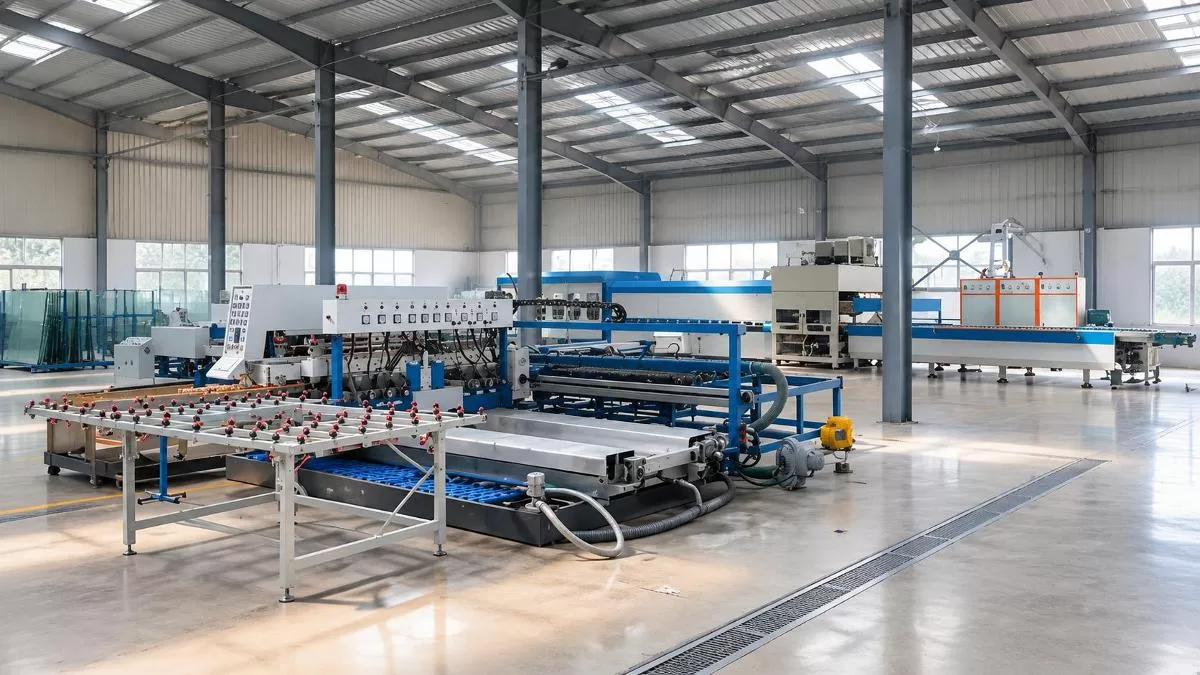
High-volume architectural fabrication demands uncompromising dimensional accuracy and flaw-free edge finishing, making modern shower glass processing machinery the operational backbone of competitive glass plants. Shower enclosures, especially heavy frameless doors spanning 8mm to 12mm in thickness, place extreme mechanical stress on perimeter edges. When fabricators struggle with unexpected furnace blowouts, chipped corners, or cloudy arris profiles, processing instability during sizing, parallel grinding, and washing is often a contributing factor. Edge condition, raw glass quality, and the heat treatment cycle all interact, so a recurring breakage pattern is best diagnosed by reviewing edge finishing, float glass quality, and furnace parameters together rather than assuming a single cause.
The Engineering Realities of Shower Glass Fabrication
Why Edge Finishing Governs Shower Door Safety and Tempering Yields
Thermal tempering transforms architectural glass by building high compressive stress on the exterior faces while entrapping severe tensile stress within the core. Many building codes require safety glazing in specified shower or bathtub locations, and fabricators should confirm the applicable local code for their project rather than assume a single global requirement. Within that regulatory context, ANSI Z97.1 sets out performance and testing criteria for safety glazing materials, while EN 12150 defines the characteristics expected of thermally toughened soda-lime silicate safety glass once that glass-making method is specified. Because tempered lites cannot be recut, drilled, or re-edged without catastrophic failure, every perimeter profile must reach near-perfect condition prior to furnace heating.
Microscopic chips and grinding fissures along raw sheet perimeters can act as stress concentrators during the quenching stage of a tempering furnace. As cold air blasts the heated plate, uneven cooling gradients pull against any perimeter flaws present, and in some cases this contributes to sudden breaks. Well-controlled edgework that minimizes chips, fissures, and scoring marks may help reduce this breakage risk, though actual outcomes also depend on raw glass quality, furnace settings, and the specific tempering cycle used.
Dimensional Tolerances in Frameless Shower Hardware Integration
Minimalist glass hardware eliminates perimeter metal frames, resting the entire structural load of heavy glass panels on wall clamps and pivot hinges. Installers generally work with limited forgiveness, since even small deviations from square can become visible once the glass is set into pivot hinges and wall clamps. The specific tolerance a fabricator must hit depends on the hardware manufacturer's installation specifications and the individual project drawings, so these figures should be confirmed on a job-by-job basis rather than treated as a fixed industry number. If parallel edges skew out of square, door margins exhibit visible tapering, which prevents magnetic door seals from closing flush against water leakage.
Manual single-edge grinding forces operators to reposition each heavy panel four separate times, compounding reference errors on every turn. In contrast, parallel grinding through dedicated shower glass processing machinery locks the glass between rigid mechanical tracks, machining opposing margins simultaneously to reduce diagonal skew.
Throughput Bottlenecks in Manual Handling and Single-Edger Workflows
Manipulating monolithic glass sheets weighing upwards of fifty kilograms creates significant physical fatigue and surface scratch hazards on open factory floors. Workers carrying wet, slippery lites between standalone edging machines can chip corners against metal staging posts or drop sheets unexpectedly. Human intervention creates an unpredictable tempo that starves the tempering furnace of continuous, balanced batch loads, and that unevenness tends to compound as daily volume increases.
Beyond labor strain and breakages, single-sided machinery forces multiple pass-through cycles for a single batch of four-sided lites. Processing one side at a time consumes valuable floor area with staging racks, turning the intermediate staging zone into a physical bottleneck that restricts overall factory capacity. A continuous double edging line is intended to address this constraint by processing opposing edges together rather than one side at a time.
Core Architecture of an Automated Shower Glass Production Line
Precision Glass Cutting and Automatic Loading Systems
According to the supplied specifications, the Fully Automatic Glass Double Edger Machine Line begins with an automatic cutting table and an auto loading machine, letting float glass packs transition into discrete shower blanks without operators directly bearing panel weight at the start of the process. Loading and cutting equipment of this kind is commonly built around mechanized lifting and positioning aids in the broader industry, though the specific lifting mechanism and cutting-table surface used on a given order should be confirmed against the manufacturer's configuration sheet rather than assumed from general practice.
Following cutting, the blanks move toward the entry conveyor leading into the edging line, where glass-to-glass contact and corner bruising are limited by keeping panels on a steady, separated path rather than stacking or sliding them against one another. Maintaining this steady advancement between the cutting stage and the first edging station helps keep the batch moving at a predictable pace, which matters because uneven infeed timing is one of the more common sources of line stoppages in continuous edging work.
Synchronized Double Edging: Parallel Spindle Grinding and Polishing
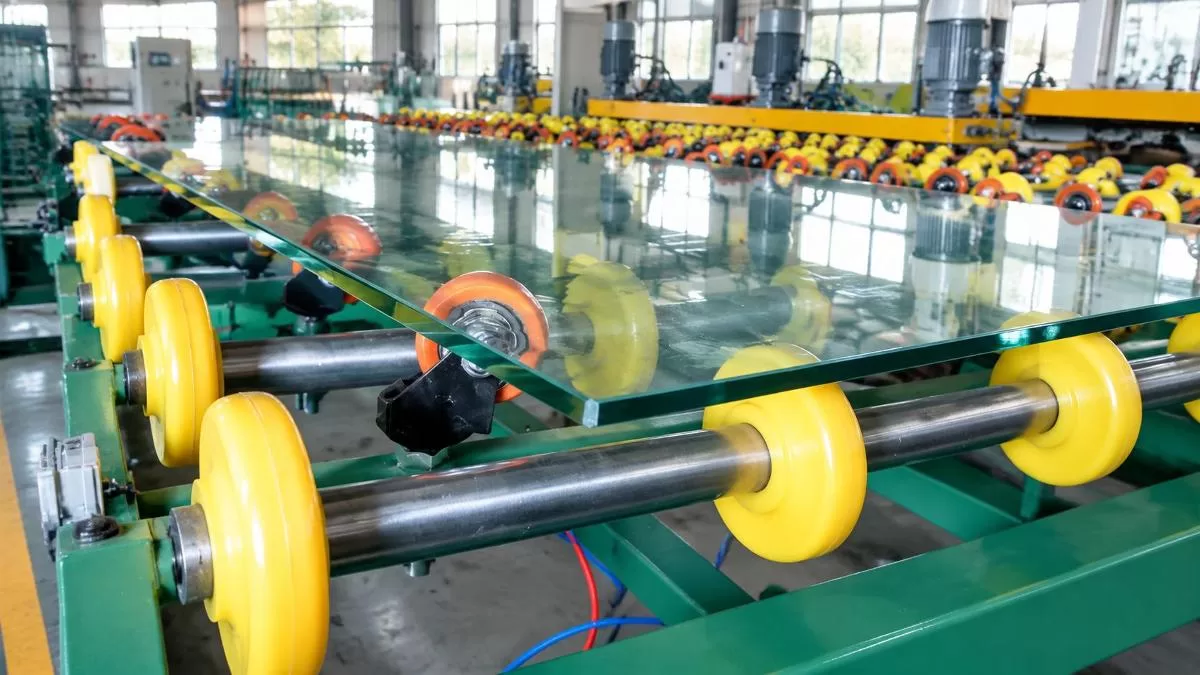
The product specifications confirm that the line includes two to three glass double edging machines, each capable of double straight-line edging or round edging, which machine two opposing glass margins in a single continuous pass rather than one edge at a time. Holding the glass firmly against guide tracks while it passes through the grinding and polishing wheels is central to this process, since any wandering of the panel during the pass tends to show up as a loss of parallelism between the two finished edges.
As the glass advances through the machine, the spindle stations remove glass stock in stages while coolant carries away the resulting abrasive swarf. A controlled, steady feed rate through this sequence is generally what separates a clean, continuous edge from the wavy or stepped edges that tend to appear when feed speed is adjusted unevenly during long manual runs.
Automatic 90-Degree Transfer Tables: Straight-Line vs. L-Shaped Routing
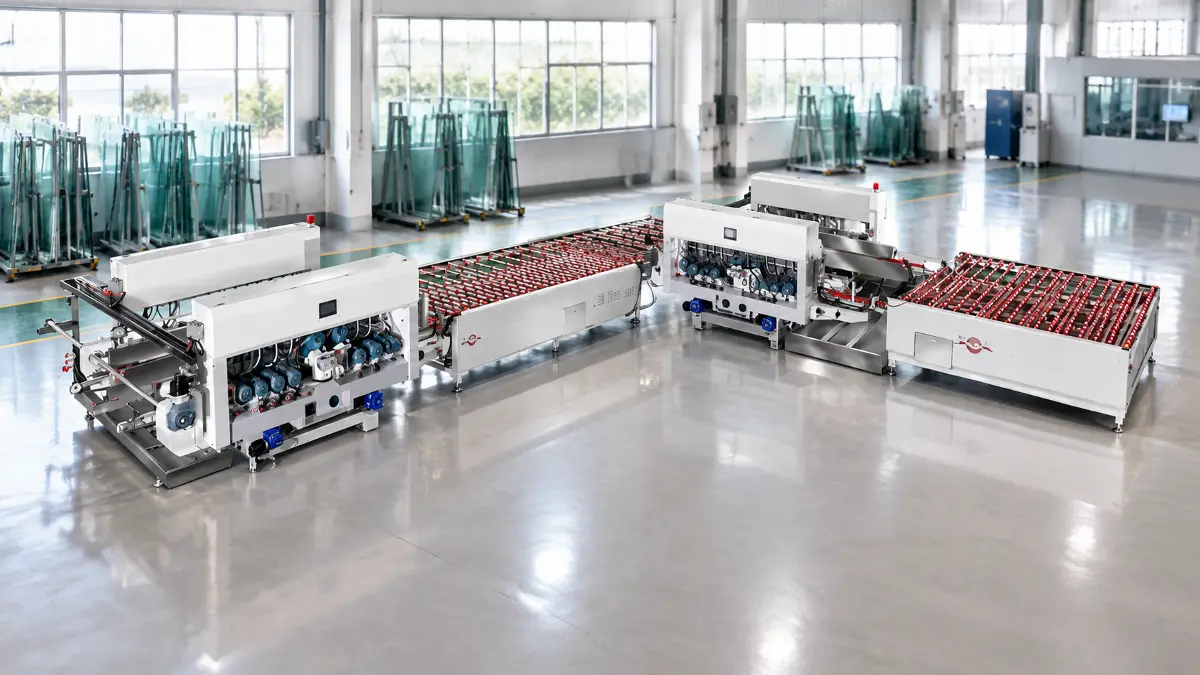
Once the primary parallel edges emerge ground and polished, the glass sheet requires rotation to process its two remaining margins. The supplied specifications confirm a glass transferring table as part of the line, available in straight-line or L-shape configurations to suit the layout of the workshop, and the exact mechanics of this transfer stage, including any sensors or drive components fitted, should be confirmed against the manufacturer's specification for the configuration ordered.
-
In a straight-line layout, the glass sheet is transferred forward and redirected toward the second double edging machine so its remaining two margins can be processed in turn.
-
In an L-shape layout, the transfer table changes the direction of travel by routing the sheet toward the second machine along a different axis, which the manufacturer positions as suiting plants with a more compact or square footprint.
-
The specific equipment used to confirm panel alignment during this transfer varies by configuration and should be confirmed with the manufacturer rather than assumed.
Industrial Glass Washing and Drying for Residue-Free Tempering Prep
Ground edges shed dense glass fines that mix with process water, settling as abrasive slurry on upper and lower panel surfaces. If this residue is not removed before the glass enters the tempering furnace, it can leave the surface insufficiently clean, which may show up as surface marks or deposits once the glass has gone through heat treatment. The product line includes a glass washing machine as a standard component for this reason, positioned after the edging and transfer stages and before the glass leaves the production line.
Industrial washing equipment of this type typically combines brush scrubbing with a rinse and drying stage, lifting loose particulates out of edge profiles and any drilled features before air knives or similar drying elements remove surface moisture. The goal across this washing stage is consistent: presenting clean, dry glass ready for furnace loading without carrying grinding residue forward into the heat treatment process.
Engineering Double Edger Configurations for Shower Doors
Spindle Selection: Configuring 2 to 11 Spindles per Side
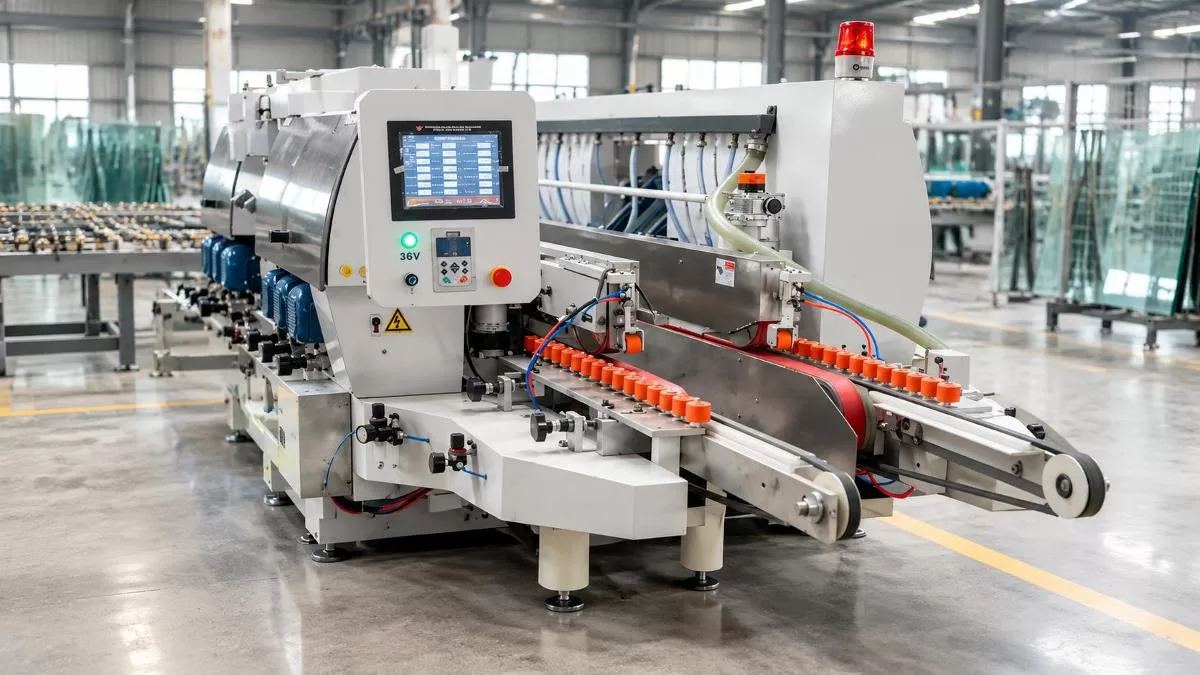
Edge quality across modern shower glass processing machinery is governed by the quantity, progression, and composition of grinding spindles mounted along each side of the machine. The Fully Automatic Glass Double Edger Machine Line, for example, is offered with a configurable range of 2 to 11 spindles per side so fabricators can match the machine to their intended edge finish and production volume rather than being locked into one fixed layout.
The table below illustrates how spindle count generally relates to tooling progression and edge outcome in the wider glass edging industry, but the exact wheel sequence, achievable finish, and suitable application for this specific product should be confirmed with the manufacturer for the configuration ordered, since actual tooling setups vary by project.
| Spindle Count (Per Side) | Illustrative Tool Layout | Typical Edge Direction | Illustrative Application |
|---|---|---|---|
| 2 to 4 Spindles | Coarse diamond, fine diamond, basic arris wheels | Ground seamed edge, matte arrises | Rough sizing, concealed frame glazing |
| 5 to 7 Spindles | Diamond profiling, resin finishing, standard polish | Commercial flat ground, semi-bright polish | Semi-frameless shower screens, partition walls |
| 8 to 11 Spindles | Progressive diamonds, dual resin, dual polish, dual arris | Flat polish, clear arrises | Premium frameless doors, exposed pivot panels |
Fabricators targeting high-end frameless hardware installations often lean toward the higher end of the spindle range to allow more gradual stock removal, but the appropriate count for a given shower door program should be confirmed with the manufacturer based on glass thickness, target finish, and throughput requirements.
Achieving the Flat Polish with Arris for Exposed Edges
Exposed frameless shower doors call for optical clarity along the edge profile, which requires a careful sequence of abrasives applied through the double edging machine. Coarser diamond wheels generally handle the initial grind down of the raw cut to remove scoring fracture lines, with the actual stock removed depending on the cutting allowance built into the panel dimensions and the finish specified for the job. Finer resin-bond diamond wheels then refine the grind profile, replacing deep micro-scratches with a smoother, more uniform surface texture.
Polishing wheels further along the spindle sequence work to restore light transmission to the edge face, a step that is standard practice in flat edge polishing across the industry. Separate arris wheels form the chamfered edges along the top and bottom corners, removing sharp margins that could otherwise nip skin or chip during hardware clamping; the exact wheel materials and sequence fitted to this product line should be confirmed with the manufacturer for the ordered configuration.
Safety Corner Dubbing and Thickness Scanning Integration
Shower doors feature exposed rectangular corners that present real puncture and impact risks during handling, transport, and routine household use. Manual corner filing tends to produce inconsistent, asymmetric radii that look crude on higher-end installs. The Fully Automatic Glass Double Edger Machine Line lists safety corner processing as an optional upgrade, giving fabricators a way to address this corner risk within the same production line rather than through a separate manual step, though the specific tooling and motion involved should be confirmed with the manufacturer for the configuration ordered.
The product line also offers an optional thickness scanning table as an upgrade, which the manufacturer's materials describe as a feature for detecting plate thickness. The specific downstream adjustments this scanning table triggers on a given installation, such as whether it changes spindle position automatically or simply flags thickness variation for the operator, should be confirmed directly with the manufacturer rather than assumed from the feature name alone.
Factory Workflow and Layout Selection for Fabricators
Straight-Line Configuration: Continuous Flow for Long Bays
Plant layout determines whether an automated double edger system should follow a straight inline arrangement or an orthogonal L-shaped footprint. Linear arrangements require long, narrow industrial factory bays, establishing a unidirectional material flow from raw storage on one end to the furnace loading zone on the other. This orientation simplifies overhead crane access and reduces mechanical transfer complexity between cutting and tempering stages.
Because glass travels along a continuous axis, straight configurations allow predictable maintenance access down both flanks of the machine line. However, the overall facility footprint must typically accommodate a long span of continuous linear length, which can restrict installation options in older, square-shaped workshops.
L-Shaped Configuration: Compact Footprint and Centralized Operator Control
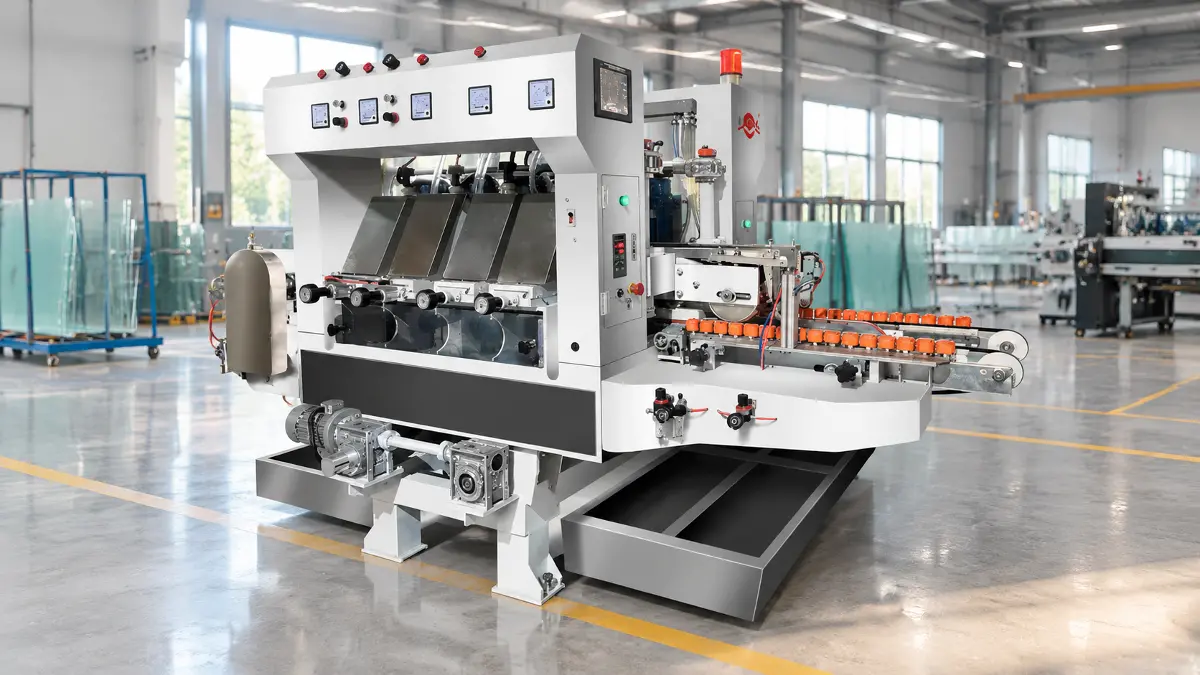
When warehouse length is constrained, an L-shaped layout makes efficient use of rectangular factory space by positioning the secondary double edger perpendicular to the first machine. The automated transferring table turns the glass panel to redirect it toward the second edger, creating an ergonomic footprint where raw cutting breakout and finished washing exit often operate within sight of one another. This arrangement can offer specific logistical benefits:
-
Operators oversee both loading and washing stages from a centralized walkway, reducing unnecessary foot travel across the plant floor.
-
Material handling routes for cullet bins, water recycling tanks, and tooling carts remain compact rather than scattered along an extended perimeter.
-
Finished glass emerges closer to furnace loading zones or vertical drilling cells, reducing transit distances for forklift trucks and mobile A-frames.
Machine Maintenance and Process Stability in Continuous Operation
Grinding Wheel Wear Compensation and Amperage Monitoring
Continuous glass processing steadily wears away diamond grains and bond matrix layers, altering wheel diameter and reducing grinding contact pressure over time. Left unchecked, worn wheels leave unground areas on raw glass or push excessive force onto remaining spindles, which can cause edge burns and motor overload trips. Operators track this mechanical balance by observing individual spindle amperage meters mounted across the main machine control console.
Rising amperage can indicate aggressive wheel bite or a dulling bond surface requiring redressing with an abrasive dressing stone. Conversely, declining amperage points to loss of edge contact, prompting the operator or automated servo control to advance the spindle toward the pass-line, maintaining consistent stock removal.
Coolant Filtration and Glass Sludge Management
Grinding ten-millimeter shower panels generates substantial volumes of glass particulates that quickly turn processing water into a dense, abrasive suspension. Recirculating unfiltered slurry back onto the workpiece can clog cooling nozzles, wear down diamond tools, and leave fine surface scratches on raw float faces. Clean water flow is essential to protect tooling and maintain edge clarity, and plants running shower glass at volume generally treat filtration as a basic maintenance item rather than an optional add-on, since the cost of replacing scored wheels or scratched panels tends to outweigh the cost of keeping the coolant loop clean.
-
Hydrocyclone centrifuges spin particulates out of the water column continuously, expelling concentrated glass sludge into collection hoppers.
-
Coagulant dosing systems group microscopic glass particles into denser flakes, speeding up gravity settling inside multistage balance tanks.
-
Clean delivery manifolds spray pressurized water evenly across spindle contact points, helping prevent thermal shock fractures on the grinding edge.
Preventing Surface Scratches and Roller Marking
Heavy shower panels transfer substantial load onto the conveyor rollers and tracking belts that propel them through the grinding enclosure. Small chips of crushed glass embedded in rubber support rollers can act like scribing tools, marring bottom surfaces as panels travel along the conveyor line. These surface scratches often fail quality inspections after costly tempering, forcing fabricators to scrap otherwise finished panels.
Routine maintenance protocols call for regular washdowns of intermediate transfer rollers and periodic inspection of synchronized conveyor belts. Keeping rubber drive components soft, supple, and clear of glass debris helps prevent surface scratches and keeps panels securely anchored during heavy grinding passes.
Automated Production Line Integration for Frameless Shower Fabrication
Engineering an automated processing line requires combining robust machine components with practical factory layouts. For us at LIAODA (LAD) Glass Machinery Co., Ltd., formerly Yuanda Glass Machinery, this equipment balance is built on decades of manufacturing development dating back to the 1990s in Foshan City, Guangdong Province, China. Our Yuanda brand machinery serves glass processing facilities in China and over 100 countries and regions worldwide by providing integrated, high-output production lines.
The Fully Automatic Glass Double Edger Machine Line combines an automatic cutting table, an auto loading machine, multiple double edging machines, a glass transferring table, and a glass washing machine into a continuous workflow. According to the product specifications, the line supports configurable spindle quantities from 2 to 11 per side, straight-line or L-shape configurations, and optional upgrades such as automatic glass loading, thickness scanning tables, and safety corner processing. This combination of shower glass processing machinery is intended to help fabricators pursue consistent edge quality, squareness, and throughput for frameless shower door production.
Frequently Asked Questions (FAQs)
What machinery is essential for setting up a shower glass manufacturing line?
A shower glass production cell typically needs an automated glass cutting and breakout stage, a double edger machine line with transfer tables, a glass washing and drying machine, and a flat tempering furnace. Depending on the door and hardware design, the cell may also need CNC drilling or milling equipment for hinge cutouts, handle holes, or other openings, since these requirements vary with the specific door style and hardware selected rather than applying uniformly to every project.
Why is high-precision edging critical before shower glass enters the tempering furnace?
Tempering introduces strong tensile stresses into the core of the glass pane, which pulls directly against perimeter edges. If an edge exhibits micro-cracks, deep saw marks, or shell chips from improper grinding, thermal quenching can concentrate stress around these flaws, sometimes causing breaks inside the furnace chamber. Precision grinding and polishing reduces edge micro-fissures, which may help preserve structural integrity under rapid heating and air quenching, though results also depend on glass quality and the specific tempering cycle used.
How many spindles per side should fabricators choose for frameless shower door edging?
Fully automatic double edger lines are commonly offered with 2 to 11 spindles per side, and higher spindle counts generally support a more gradual, progressive grind that can help with achieving a clear flat polish on exposed frameless edges. The exact number suited to a given shower door program depends on glass thickness, target finish, and output targets, so fabricators should confirm the recommended configuration directly with the machine manufacturer rather than relying on a single fixed figure.
What are the layout advantages of an L-shaped double edging line over a straight line?
An L-shaped double edger line fits more easily inside squarer factory floor plans, reducing the overall bay length needed for equipment setup. It also brings the infeed loading and outfeed washing zones closer together, allowing operators to monitor both ends of the line from a central aisle. Straight lines, on the other hand, require longer, narrower industrial buildings, though they can offer simplified linear transport for extended high-volume runs.
How does automated double edging help reduce glass breakage during high-speed handling?
Automated lines reduce manual panel flipping and overhead crane handling between edge passes. Synchronized drive belts advance glass across opposing grinding spindles under uniform clamping pressure, limiting panel twisting and uneven impact against grinding wheels. Smoother, automated transfers help reduce corner chipping, lower handling fatigue, and support stable batch flow through to the washing stage.
Conclusion
Operating a competitive architectural glass facility requires balancing production speed with strict edge quality standards. Investing in capable shower glass processing machinery can help reduce the manual handling bottlenecks, diagonal out-of-square errors, and tempering breakage that hold back traditional glass shops. By integrating automated loading systems, multi-spindle double edgers, and industrial washing stations into a unified production line, fabricators work toward the edge polish, tolerances, and reliable yields that frameless shower door production demands.
CONTACT US


LIAODA (LAD) Glass Machinery Co., Ltd.
We are always providing our customers with reliable products and considerate services.
If you would like to keep touch with us directly, please go to contact us
-
![Home]()
Home
-
![Tel]()
Tel
-
![Email]()
Email
-
Share
-
![Contact]()
Contact


