Engineering Principles of CNC Glass Cutting Machine Production Lines
- By:LiaoDA
- Date:2026-09-22
Processing brittle materials at an industrial scale presents a fundamental engineering paradox. Manufacturers must apply massive kinetic force while maintaining microscopic control over fracture propagation. When sourcing reliable china glass machinery, facility operators face a barrage of performance metrics. The challenge lies in translating these raw specifications into consistent production outcomes.
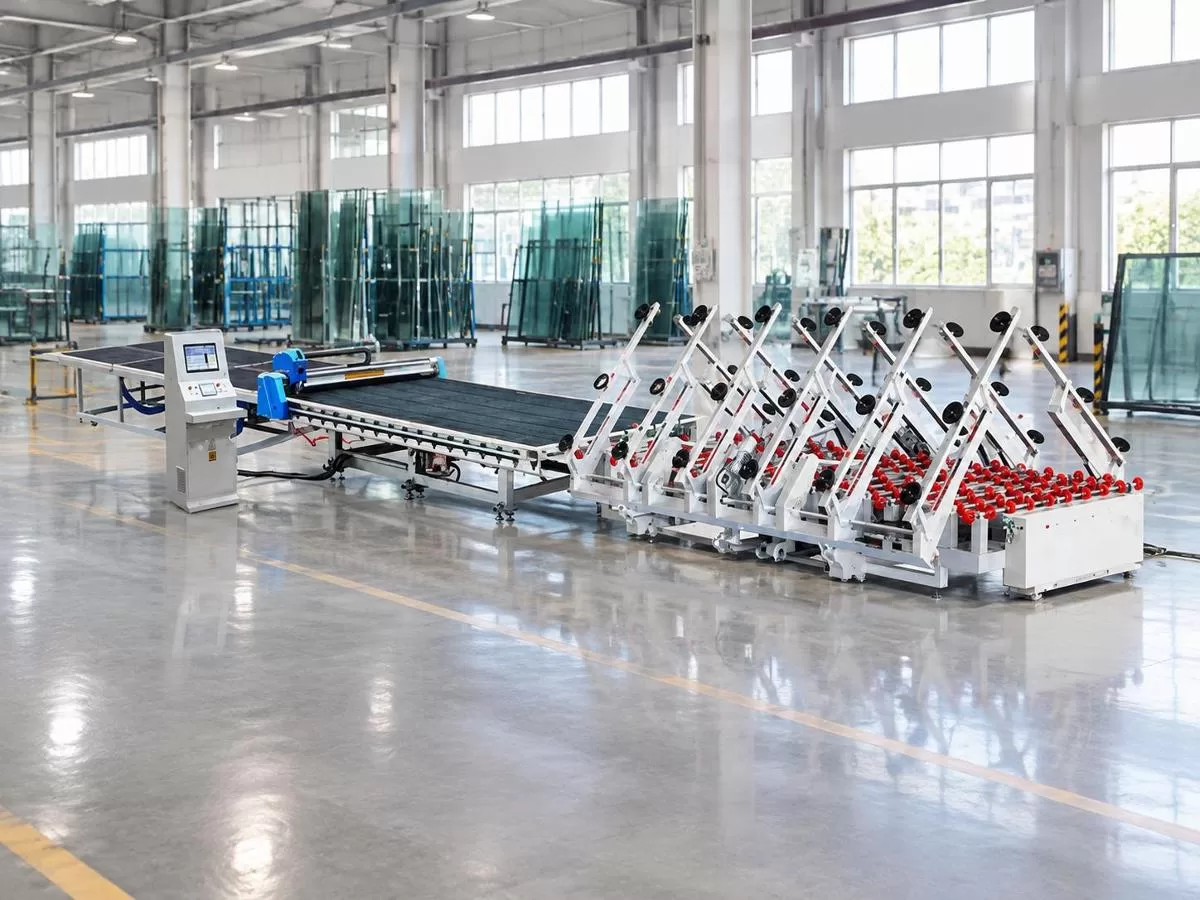
Surface defects and dimensional inaccuracies often stem from misaligned structural components rather than operator error. A fully integrated production line must synchronize raw material handling with precision scoring protocols. The YD-CTL series approaches this synchronization by connecting loading, cutting, and breaking into one continuous mechanical sequence.
This integration eliminates the unpredictable thermal and physical shocks associated with manual glass handling. Every time human operators move a glass sheet, they introduce uneven stress distributions across its surface. Automated systems remove these variable bending moments from the processing equation entirely.
Operators running continuous production shifts require absolute predictability from their equipment. Variations in mechanical behavior lead to rejected materials and compromised project timelines. Understanding the physical mechanics behind high-end equipment helps managers make informed procurement and operational decisions.
The Physics Behind ±0.3mm Dimensional Precision
Glass is an amorphous solid that does not cut in the traditional sense. Mechanical processing relies on initiating a microscopic median crack along the surface. This controlled flaw dictates exactly how the material will separate during the subsequent breaking phase.
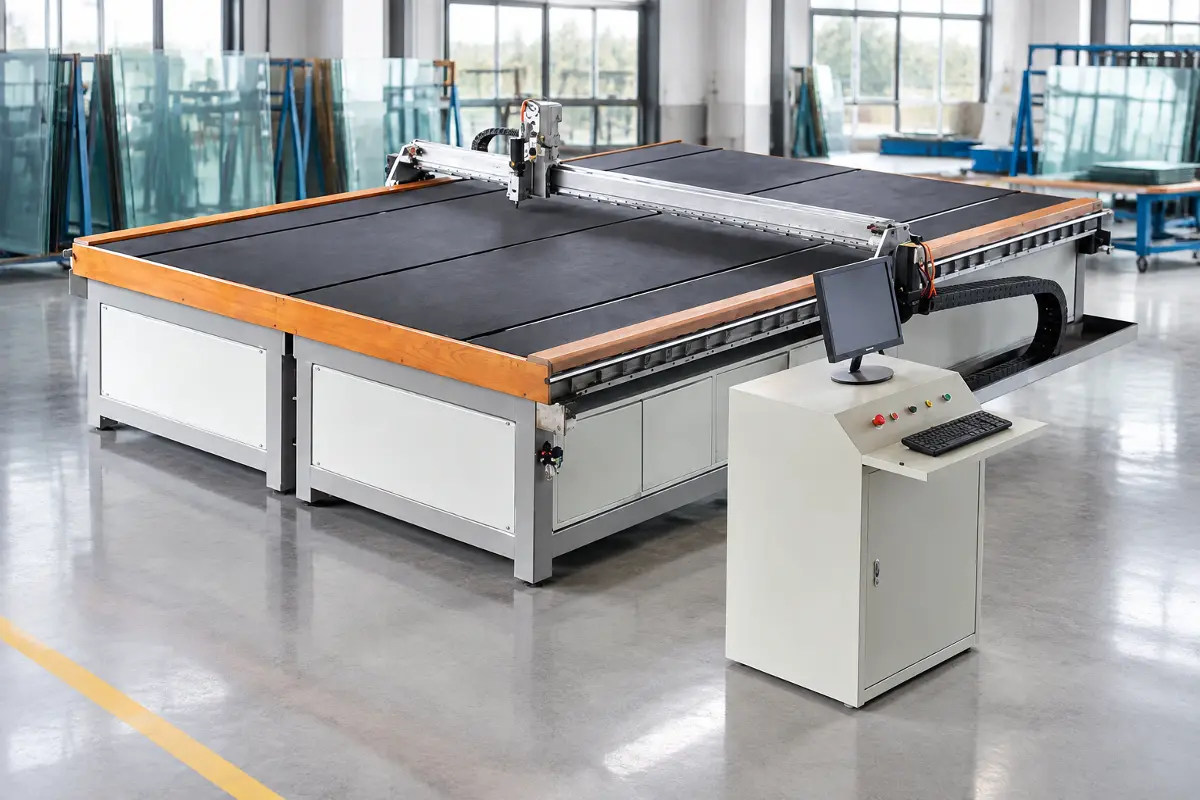
Achieving a cutting precision of ±0.3mm requires isolating the scoring head from environmental vibrations. The cutting wheel must maintain perfectly uniform downward pressure across the entire geometry of the pattern. If the pressure fluctuates by even a fraction of a newton, the depth of the median crack will vary.
Inconsistent crack depth causes the final break to deviate from the intended path. The YD-CTL series utilizes advanced computer numerical control to govern the Z-axis pressure dynamically. This active feedback loop adjusts the wheel force based on the instantaneous speed of the cutting head.
The geometry of the tooling also interacts directly with the silicate structure of the glass. The angle of the tungsten carbide wheel determines the width of the stress zone. A ±0.3mm precision rating means the machine successfully restricts lateral stress propagation within a highly confined microscopic boundary.
For structural glazing installations, this level of dimensional accuracy significantly reduces downstream processing costs. Symmetrical edges require far less grinding and polishing before tempering. Eliminating excess edge grinding extends the lifespan of diamond abrasive wheels in subsequent fabrication steps.
Automated Workflow and Vacuum Dynamics in Loading
Moving a rigid, heavy, and fragile plane of glass introduces significant mechanical risk. Human loading relies on localized lifting points, which generate severe bending moments across the material. These invisible stress vectors often manifest as spontaneous breakage later in the production cycle.
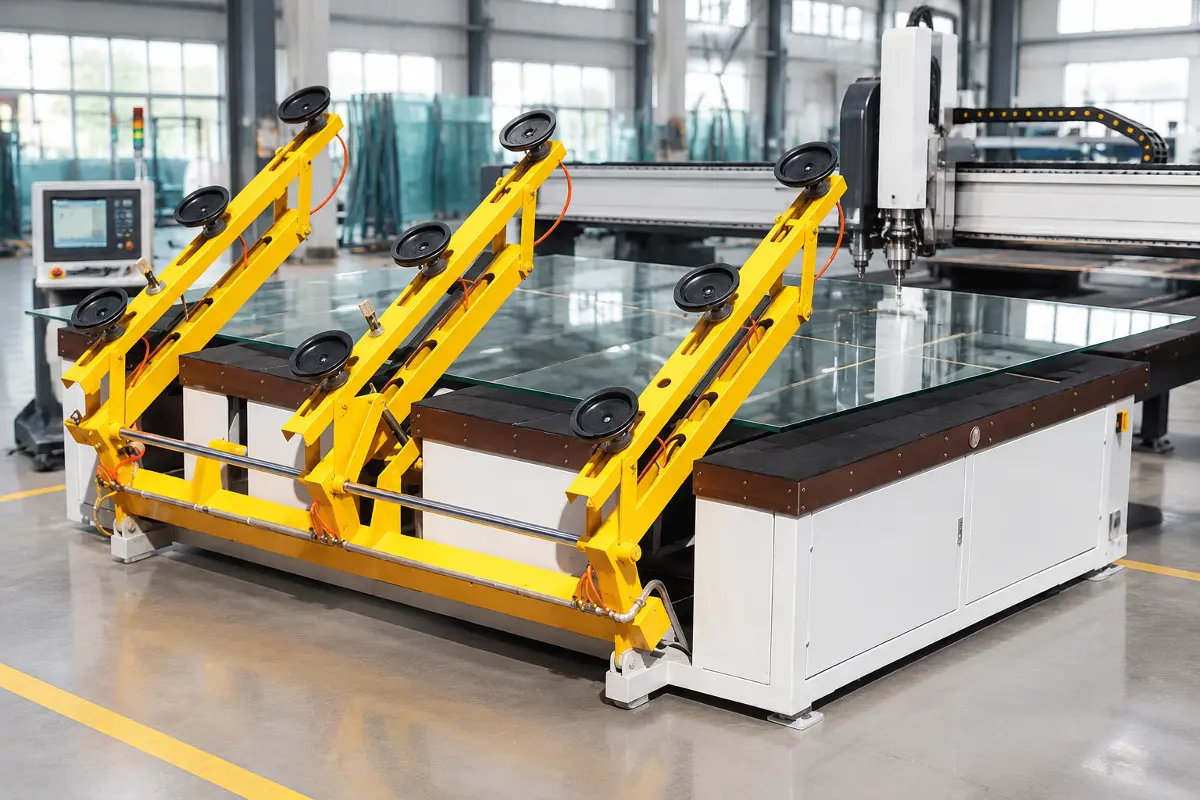
The mechanical loading sequence replaces variable human force with calculated pneumatic lift. Yellow mechanical arms utilize an array of black rubber suction cups to grip the sheet. This configuration distributes the lifting force evenly across the square footage of the raw glass.
Engineers design these pneumatic systems based on precise atmospheric pressure calculations. The vacuum pumps must generate enough negative pressure to secure heavy architectural sheets securely. However, they must not exceed the localized compression limits of thinner residential glass variants.
When evaluating automated loading workflows, operators must monitor three critical dynamic factors:
- The volumetric displacement capacity of the primary vacuum pump.
- The elasticity of the rubber seals under continuous industrial cycling.
- The synchronization speed between the mechanical arm tilt and the loading table.
Automated transfer mechanisms dramatically shorten the operational cycle time between raw inventory and active processing. Machines drop the material precisely onto the 900±25mm high working table without inducing lateral shock. This repeatable, gentle placement protects the microscopic integrity of the glass edges before scoring even begins.
Kinematics of High-Speed CNC Motion Profiles
Industrial throughput demands speed, but velocity fundamentally antagonizes precision. The YD-CTL series boasts a maximum cutting speed of 120m/min across its dark-surfaced working table. Operating heavy gantry bridges at these velocities requires sophisticated kinematic management software.
Straight-line speed is mechanically simple to achieve with high-torque servo motors. The true engineering challenge emerges when the cutting head approaches a sharp corner or complex geometric curve. Inertia dictates that a moving mass wants to continue in its current trajectory.
If a machine hits a right angle at 120m/min without proper deceleration, the gantry will overshoot the coordinate. This overshoot causes corner chipping and ruins the dimensional tolerance of the piece. Advanced CNC architecture calculates complex bezier curves to manage acceleration and deceleration micro-seconds before directional changes.
This predictive motion planning allows the tool head to maintain the maximum possible speed without sacrificing the ±0.3mm precision limit. The servo drives constantly communicate with the central processor to verify their absolute position along the precision rails.
High-speed operations also necessitate specialized cutting fluid management. At 120m/min, the friction between the carbide wheel and the glass generates significant localized thermal gradients. The machine must deploy low-viscosity cutting oil precisely into the score line to cool the wheel and prevent the micro-crack from healing.
Structural Damping in Heavy-Duty Frameworks
The fundamental skeleton of any precision processing equipment dictates its absolute performance ceiling. High-speed servo movements generate aggressive low-frequency vibrations that ripple through the machine structure. If the base cannot absorb these kinetic waves, they will transfer directly into the glass surface.
The models in the YD-CTL series weigh between 8000 and 12000 kilograms. This massive physical weight is not merely a byproduct of using thick steel components. Engineers intentionally utilize extreme mass to create a passive acoustic dampener against operational resonance.
When the gantry bridge reverses direction instantly during a complex pattern execution, it creates a kinetic shockwave. A lightweight frame would flex under this torque, causing the cutting wheel to stutter across the glass. This stuttering leaves a dashed score line, ensuring a catastrophic failure during the breaking phase.
For us, designing heavy-duty industrial equipment involves calculating the natural harmonic frequency of the steel framework. The structural mass forces the resonant frequency of the frame well below the operating frequency of the servo motors. This mechanical decoupling ensures the black felt-like work surface remains perfectly static.
A rigid foundation also ensures long-term geometric trueness across the entire lifespan of the equipment. Industrial production lines often operate around the clock in challenging factory environments. Heavy gauge steel construction prevents the guide rails from warping or settling under continuous operational stress.
Fracture Mechanics Across Diverse Material Thicknesses
Architectural demands force modern fabrication facilities to process a wide variety of material specifications. The physical behavior of a 3mm residential window pane differs wildly from a 19mm structural facade panel. The production line must accommodate these diverse mechanical properties seamlessly.
Creating a successful break in 3mm glass requires a very shallow score and minimal mechanical bending force. Applying excessive pressure from the CNC head will crush the surface layer, creating lateral fissures instead of a clean median crack. The breaking table must apply highly localized upward pressure to separate the thin sheet.
Conversely, processing 19mm structural glass demands maximum downward wheel pressure to drive the median crack deep into the material. The tensile strength of thick glass aggressively resists separation. The breaking sequence requires significant mechanical leverage along the exact axis of the CNC score line.
The YD-CTL system architecture adapts to these varying thickness parameters through programmable pressure profiles. Operators select the material thickness, and the machine automatically scales the pneumatic and servo forces accordingly. This eliminates the guesswork and manual recalibration previously required when switching production runs.
Handling the extreme spectrum of 100×100mm minimum cuts up to large construction components requires versatile table mechanics. Small artistic glass pieces demand high-density breakout zones to prevent the glass from dropping or chipping. The production line bridges the gap between high-volume commercial runs and delicate bespoke orders.
Evaluating Machine Specifications for Facility Integration
When planning a factory floor layout, production managers must align machine capabilities with their specific market demands. Upgrading an entire production sequence represents a massive logistical undertaking. Analyzing the technical specifications objectively prevents costly bottlenecks down the line.
The physical footprint of the equipment dictates how raw materials flow through the building. A machine capable of processing a 6100×3300mm sheet requires massive clearance for the loading arms to pivot safely. Managers must map the safe travel paths of overhead cranes and forklift corridors.
The table below outlines the core specifications across the three primary models:
| Specification Metric | YD-CTL-4228 | YD-CTL-5133 | YD-CTL-6133 |
|---|---|---|---|
| Max. Glass Size (mm) | 4200×2800 | 5100×3300 | 6100×3300 |
| Machine Weight (kg) | 8000 | 10000 | 12000 |
| Ideal Market Focus | Standard Architectural | Commercial Facades | Oversized Structural |
Matching the machine model to the facility's primary product output maximizes the return on capital investment. Purchasing the largest model available might seem advantageous, but it increases baseline power consumption and tooling wear. Facilities focusing on residential components rarely need the immense span of the 6133 model.
Understanding the limits of the ±0.3mm precision rating also guides quality control protocols. Quality assurance teams can program their digital inspection scanners based on these exact mechanical tolerances. This data integration streamlines the entire verification process before the glass moves to the edging or tempering departments.
Frequently Asked Questions on CNC Glass Processing
Why does edge chipping occur even when using a brand-new tungsten carbide cutting wheel?
Edge chipping is rarely a failure of the cutting wheel's sharpness. It usually stems from incorrect fluid viscosity or an improper pressure angle relative to the machine speed. If the cutting oil evaporates too quickly, the micro-crack closes before the glass reaches the breaking table, forcing the operator to use excessive mechanical force to separate the piece.
Can a single production line effectively switch between 3mm interior glass and 19mm structural glass?
Yes, but it requires highly responsive CNC programming to alter the mechanical dynamics. Processing 19mm glass relies on deep stress propagation, while 3mm glass requires surface-level scoring to avoid crushing the material. High-end automated lines manage this transition by actively adjusting both the Z-axis pressure and the pneumatic breakout force based on pre-programmed material profiles.
How does atmospheric pressure affect the reliability of the automatic loading arms?
Vacuum suction relies entirely on the pressure differential between the inside of the rubber cup and the ambient environment. Facilities located at high altitudes experience lower atmospheric pressure, which mechanically reduces the maximum lifting capacity of the system. Factory managers must ensure the primary vacuum pumps are calibrated to account for local environmental variables to prevent catastrophic drops.
Why is an 8000kg to 12000kg machine weight necessary for processing fragile materials?
Vibration is the absolute enemy of clean fracture mechanics. When a servo motor drives a heavy cutting bridge at 120m/min, it generates massive kinetic energy. If the machine base lacks the physical mass to absorb and dissipate this kinetic energy, the vibrations travel into the glass, causing the cutting wheel to bounce and ruin the score line.
What causes dimensional drift across the diagonal measurements of a large cut sheet?
Dimensional drift usually indicates a calibration error in the dual-drive synchronization of the gantry bridge. If the left and right servo motors fall out of phase by even a fraction of a millimeter, the cutting head travels at a slight microscopic angle. Regular laser calibration of the precision rails is required to maintain the specified ±0.3mm tolerance across large spans.
Aligning Mechanical Capabilities with Production Goals
Mastering the physical behavior of silicate glass under mechanical stress defines the success of any fabrication business. Every parameter on a technical specification sheet translates directly into real-world operational stability. Relying on sheer force is no longer sufficient in an era demanding microscopic tolerances.
Equipment engineers continue to refine the interplay between heavy-duty mechanics and delicate material handling. The transition from raw silica sheets to precision-engineered architectural components relies entirely on controlling invisible stress vectors. Facilities that respect these physical laws naturally achieve higher yield rates and superior edge quality.
When expanding operational capacity, investing in robust china glass machinery provides the necessary foundation for predictable growth. Aligning precise CNC kinematics with stable structural damping ensures continuous production without quality degradation. Ultimately, technical transparency and mechanical reliability remain the true drivers of long-term manufacturing success.
CONTACT US


LIAODA (LAD) Glass Machinery Co., Ltd.
We are always providing our customers with reliable products and considerate services.
If you would like to keep touch with us directly, please go to contact us
-
![Home]()
Home
-
![Tel]()
Tel
-
![Email]()
Email
-
Share
-
![Contact]()
Contact


