Operational Strategies for Evaluating Glass Machinery Suppliers
- By:LiaoDA
- Date:2026-09-18
Industrial glass processing leaves no margin for mechanical hesitation. Plant managers face intense pressure to optimize yield rates while minimizing energy consumption. Finding reliable glass machinery suppliers becomes a critical operational safeguard rather than a simple purchasing task.
Equipment downtime instantly erodes profit margins. When an edging line stops, downstream tempering and laminating stations starve. Buyers must look beyond surface specifications to understand true mechanical endurance.
A robust evaluation requires dissecting equipment architecture. This means analyzing spindle vibration tolerances, base frame metallurgy, and electrical control stability. We must evaluate how these physical traits solve daily factory bottlenecks.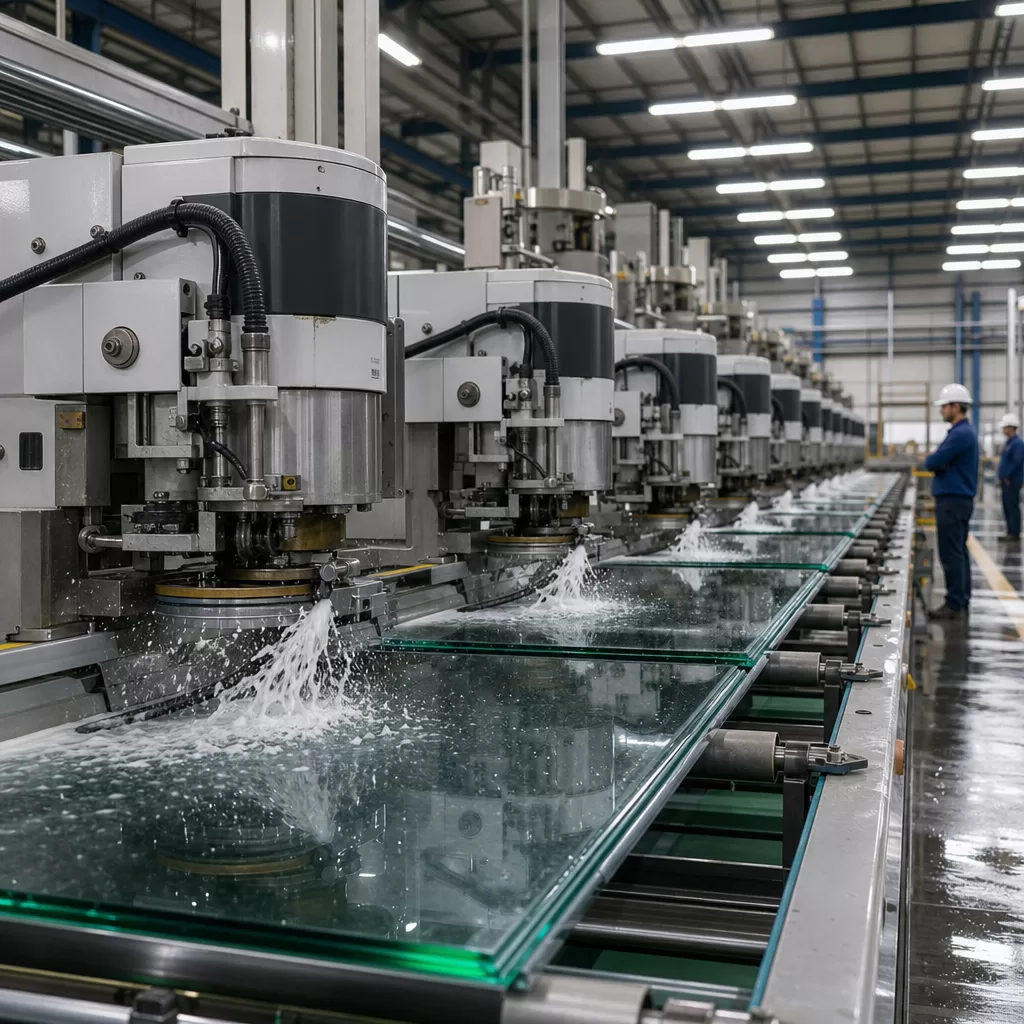
The Financial Friction Behind Inadequate Procurement
Vibration remains the silent enemy in cold processing operations. It creates microscopic fissures along the glass edge during high-speed grinding. These invisible flaws often survive undetected until the panel reaches the tempering furnace.
Inside the heating chamber, thermal stress aggressively targets these micro-fissures. The glass shatters into hundreds of pieces, causing sudden and violent production halts. Operators must then spend hours manually cleaning the ceramic rollers.
Subpar equipment base frames consistently fail to absorb these grinding frequencies. Heavy cast-iron bases effectively dampen these destructive physical waves. Plant operators avoid massive yield losses simply by prioritizing base structural rigidity.
Cheap machinery generates hidden operational taxes through continuous part degradation. Water pumps fail prematurely, and transmission chains stretch beyond usable tolerances. The initial capital saved is quickly consumed by endless replacement invoices.
Categorizing Market Offerings by Operational Intent
Procurement teams often face distinct tiers of manufacturers. European legacy brands offer immense precision but require massive capital expenditure. Their return on investment takes years to materialize for standard architectural processors.
Entry-level assembly workshops compete entirely on bottom-line pricing. They utilize light steel frames and unbranded electrical components. These machines inevitably suffer catastrophic failures during continuous peak-season production schedules.
The optimal balance lies with specialized manufacturers who prioritize functional stability and agility. For us, operating out of our manufacturing base in Foshan City since the 1990s, this means blending high-tech components with localized engineering efficiency.
We leverage mature industrial supply chains in Guangdong to source premium raw materials. This allows the integration of heavy-duty casting and advanced control systems without inflating the final equipment cost.
Essential Design Metrics for Straight-Line Edging
Straight-line edging machines represent the backbone of basic architectural glass preparation. Their daily throughput defines the baseline rhythm of the entire factory. Variations in grinding pressure immediately ruin edge polish quality.
Buyers should carefully inspect the transmission track pads. High-friction, wear-resistant synthetics ensure the heavy glass sheet travels without slipping. Even a millimeter of lateral drift ruins the designated chamfer angle.
Spindle motor selection directly influences processing speed and torque delivery. Direct-drive configurations reduce mechanical energy loss compared to belt-driven alternatives. Sealed motor units prevent highly abrasive glass slurry from destroying the internal bearings.
We can categorize spindle configurations based on distinct production requirements:
- Multi-stage diamond wheels for rapid stock removal on thick panels.
- Resin wheels designed for fine surface smoothing and preparation.
- Felt wheels utilizing cerium oxide for optical-grade polishing applications.
Thermal Processing Dynamics and Energy Efficiency
Hot processing demands absolute control over complex thermodynamic variables. Tempering furnaces consume vast amounts of electrical grid capacity. Every wasted kilowatt directly attacks the operational bottom line of the facility.
Top-heating matrix designs must account for the reflective nature of Low-E glass. Standard radiation heating fails to penetrate the coated surface evenly. This physical limitation results in severe spherical bowing or roller wave distortion.
Forced convection systems solve this by driving heated air directly against the glass surface. High-temperature blowers equipped with variable frequency drives ensure precise airflow management. This prevents coating degradation while achieving strict optical flatness.
The quenching section requires equally precise fluid dynamics engineering. Rapid air cooling determines the final surface compression stress. Aerodynamic nozzle design minimizes air resistance, delivering sharp bursts of cooling pressure to secure the glass temper.
Component Standardization and Maintenance Viability
Proprietary electronics create dangerous supply chain bottlenecks for glass processors. If a custom circuit board fails, the factory must wait for overseas shipping. This delay completely paralyzes production schedules and delays client deliveries.
Machines built with globally standardized electrical components mitigate this operational risk. Sourcing contractors should look for familiar contactors, relays, and servo drivers inside the main electrical cabinet.
Standardization allows your internal maintenance team to source replacements locally. A burned-out inverter from a recognized global brand can be replaced within hours. Factory uptime depends entirely on this localized accessibility.
Evaluating Double Edging Line Synchronization
Double edging lines process two parallel sides of a glass sheet simultaneously. They are essential for massive architectural panels and appliance glass. The critical metric defining their success is absolute diagonal tolerance.
If the two grinding heads are not perfectly synchronized, the resulting glass becomes a subtle parallelogram. This geometric shape fails immediately during structural glazing or tight-tolerance framing assembly.
High-end systems utilize absolute servo motors linked via precision ball screws. This architecture guarantees that width adjustments remain parallel down to fractions of a millimeter.
Key components ensuring double edger precision include the following elements:
- Linear guide rails equipped with continuous automated oil lubrication.
- Pneumatic polishing compensation systems for consistent surface pressure.
- High-resolution encoders feeding real-time positional data to the processor.
Structural Comparison of Processing Equipment
Understanding the physical differences between equipment tiers helps clarify expected operational lifespans. Evaluating the core materials reveals the true engineering intent behind the machine.
| Component | Standard Entry-Level Setup | Production-Grade Architecture | Operational Impact |
|---|---|---|---|
| Machine Base | Welded thin-gauge steel | Annealed heavy cast iron | Absorbs vibration, preventing edge chipping and defects. |
| Control System | Basic analog relay logic | Touchscreen processor with diagnostics | Speeds up troubleshooting and reduces maintenance downtime. |
| Conveyor Track | Standard industrial rubber pads | Specialized anti-slip synthetics | Maintains precise glass alignment during heavy grinding. |
| Spindle Motors | Generic local motor brands | High-torque sealed motors | Prevents water ingress and ensures stable grinding RPM. |
| Water Piping | Flexible PVC tubing | Rigid stainless steel manifolds | Resists abrasive slurry and prevents internal blockages. |
The Mechanics of Glass Washing and Drying
Washing machines seem conceptually simple but frequently cause severe downstream defects. Leftover moisture or microscopic dust ruins laminating adhesion. It also creates permanent aesthetic stains inside insulated glass units.
Air knife design dictates the actual drying efficiency of the machine. Traditional straight knives leave water droplets along the trailing edge of the glass. Angled air knives physically shear the water sheet off the surface.
Handling soft-coated Low-E glass requires highly specialized brush configurations. Standard hard nylon bristles will instantly scratch the delicate microscopic silver layers. Damaged coatings render the entire glass panel useless for architectural applications.
To process sensitive surface coatings safely, washing systems must incorporate:
- Ultra-soft bristles measuring between 0.08mm and 0.20mm in diameter.
- Variable speed brush motors to adjust physical contact force.
- Multi-stage reverse osmosis water filtration heating tanks.
CNC Routing and High-Speed Drilling Tolerances
Frameless shower doors and intricate architectural facades require precise hardware cutouts. Manual drilling limits production volume and constantly invites human error. Misplaced holes mean instant material waste and delayed installations.
CNC working centers execute complex milling, routing, and polishing in a single setup. The physical rigidity of the overhead bridge directly impacts the surface finish of the routed cutout.
Vacuum cup positioning must hold the glass firmly against aggressive lateral milling forces. If the vacuum pump loses even slight pressure, the glass shifts. The spinning milling bit then shatters the expensive panel.
Internal spindle cooling mechanisms separate robust designs from fragile ones. Pumping water directly through the core bit prevents thermal expansion of the diamond tools. This extends tool life and maintains strict dimensional accuracy.
Navigating the Integration of Automated Loading
Labor costs continue to rise sharply across the industrial manufacturing sector. Handling raw jumbo glass sheets is dangerous, slow, and physically exhausting. Automated loading tables are becoming mandatory for workplace safety and speed.
Hydraulic tilting arms must operate with absolute mechanical smoothness. Sudden jerks during the transition from vertical to horizontal will snap thin glass sheets under their own weight.
Vacuum suction arrays require sophisticated multi-zone pneumatic controls. This allows the system to handle varying glass sizes without pulling ambient air. Efficient loading systems feed cutting tables continuously, maximizing total line output.
Comparing glass machinery suppliers requires analyzing their automation integration capabilities. A supplier providing seamless communication between the loading table and the cutting bridge eliminates dangerous manual intervention.
Analyzing Water Management and Slurry Filtration
Cold processing generates massive amounts of microscopic glass dust mixed with cooling water. This heavy abrasive slurry destroys water pumps and blocks piping if not managed correctly.
Centrifugal filtration systems separate heavy glass particles from the primary water flow. Clean water is then pumped back to the grinding spindles. This closed-loop approach drastically reduces expensive municipal water consumption.
Effective slurry management also protects the machine's moving parts from premature wear. When abrasive water splashes onto guide rails, it grinds down the metal. Protective bellows and stainless steel covers must shield all critical transmission components.
The Role of Pneumatics in Glass Handling
Compressed air systems drive many of the critical adjustments in glass manufacturing. Pneumatic cylinders control polishing wheel pressure, ensuring an even finish without cracking the glass edge.
Inconsistent air pressure leads to immediate quality control failures. If the pressure drops, the polishing wheel loses contact, leaving dull spots. If the pressure spikes, the wheel burns the glass surface.
Reliable machines utilize high-capacity air reservoirs and precision regulators. These components buffer the machine against pressure drops in the factory's main air lines. Consistent pneumatic delivery ensures perfectly uniform edge polishing regardless of factory conditions.
Optimizing Diamond Tool Life Through Machine Rigidity
Diamond grinding wheels represent a significant recurring expense for any glass processing facility. The lifespan of these tools is directly tied to the mechanical stability of the machine driving them.
When a spindle vibrates due to a weak machine base, the diamond wheel chatters against the glass. This micro-bouncing causes uneven wear on the abrasive profile. The wheel loses its shape prematurely and requires frequent trueing.
A rigid machine holds the wheel in perfect continuous contact with the glass edge. This allows the diamond matrix to wear down evenly and slowly. Investing in a heavier machine base drastically reduces annual tooling consumption costs.
Understanding Control Logic and Software Interfaces
The digital interface dictates how quickly an operator can switch between varying glass thicknesses. Cumbersome menus lead to setup delays and typing errors. A ruined batch of tempered glass easily consumes a day's operational profit.
Modern touchscreen screens must offer intuitive visual representations of the entire machine. Operators should see real-time motor loads, conveyor speeds, and heating zone temperatures at a single glance.
Advanced alarm diagnostics separate well-engineered software from basic programming. Instead of flashing a generic error light, the system should pinpoint the exact tripped sensor. This empowers operators to resolve minor issues without calling an industrial electrician.
Evaluating Heavy-Duty Lamination Lines
Laminated glass serves as the absolute core of structural safety glazing. The interlayers require precise temperature and pressure profiles to bond correctly. Any trapped air creates visible bubbles, ruining the expensive multi-layer panel.
The pre-pressing nip rollers must apply massive, uniform pressure across the entire glass width. Deflection in these rollers causes hidden edge delamination. Thick steel rollers coated in heat-resistant silicone are non-negotiable for this process.
Autoclave cycles represent the final high-pressure cure. Temperature ramps must exactly match the specific interlayer manufacturer's data sheet. Advanced control systems automatically log these thermal profiles for strict quality assurance documentation.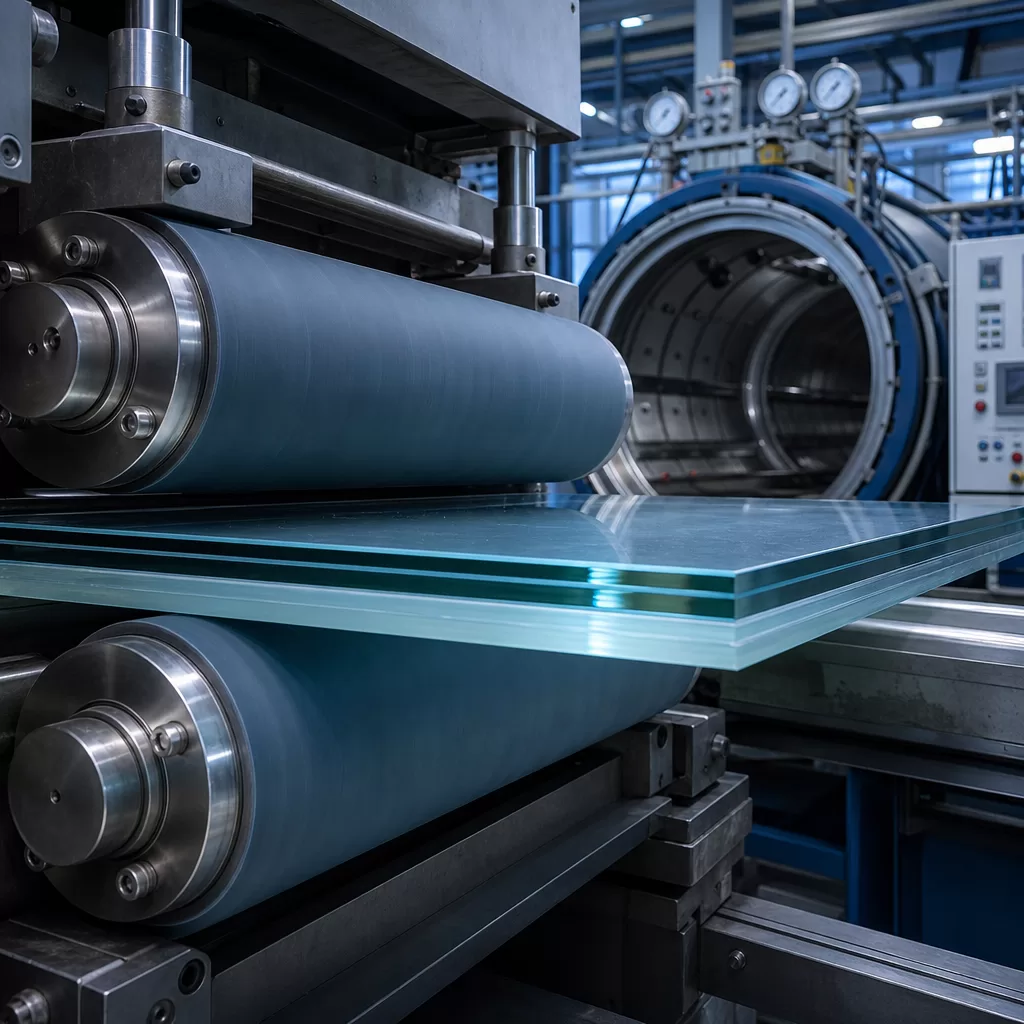
Assessing Factory Ambient Temperature Impacts
Glass machinery must perform reliably despite extreme ambient factory conditions. Summer temperatures in poorly ventilated workshops severely stress electrical components inside control cabinets.
Industrial electrical cabinets require dedicated active cooling systems. Standard ventilation fans simply push hot ambient air across sensitive inverters. Specialized cabinet air conditioners maintain a safe internal climate, preventing unexpected thermal shutdowns.
Hydraulic oil viscosity also changes dramatically with seasonal temperature shifts. High-quality hydraulic power packs include integrated thermal management. They heat the oil during winter mornings and actively chill it during peak summer production shifts.
Frequently Asked Questions in Machinery Procurement
Why do some edging machines require constant manual calibration?
Cheap transmission systems suffer from accelerated wear and tear. As basic gears and chains stretch, operators must manually adjust the spindle depth to compensate. High-quality servo-driven adjustments eliminate this unpredictable mechanical drift entirely.
How does forced convection lower factory electricity bills?
By moving hot air actively, convection transfers heat into the glass much faster than simple radiation. The glass reaches the critical quenching temperature sooner, reducing the total cycle time. Shorter cycles mean significantly less power consumed per square meter.
Can entry-level washing machines process delicate Low-E glass?
Usually, they cannot perform this task safely. Entry-level machines lack the specialized soft brushes and high-pressure drying required. They either scratch the microscopic coating or leave mineral deposits that oxidize the silver layers over time.
What is the real mechanical benefit of cast iron over welded steel?
Cast iron naturally absorbs high-frequency vibrations due to its dense graphite flake microstructure. Welded steel acts like a giant tuning fork, amplifying grinding vibrations. This physical difference directly affects the visual quality of the polished glass edge.
Establishing a Long-Term Processing Strategy
Selecting the right heavy equipment dictates your maximum competitive ceiling. If your machines cannot hold tight tolerances repeatedly, you cannot bid on high-end architectural projects.
Factory managers must view machinery as long-term operational partners. The initial purchase price is merely a fraction of the total cost of ownership. Ongoing maintenance, energy consumption, and daily yield rates dominate the financial reality.
Evaluate the mechanical logic behind every technical proposal. Demand complete transparency regarding component sourcing and base frame metallurgy. A well-engineered machine quietly absorbs the brutal physical realities of daily industrial processing.
In a market saturated with varying tiers of equipment, finding reliable glass machinery suppliers secures your production baseline. It transforms unpredictable manufacturing bottlenecks into a streamlined, highly profitable daily operation.
CONTACT US


LIAODA (LAD) Glass Machinery Co., Ltd.
We are always providing our customers with reliable products and considerate services.
If you would like to keep touch with us directly, please go to contact us
-
![Home]()
Home
-
![Tel]()
Tel
-
![Email]()
Email
-
Share
-
![Contact]()
Contact


