Understanding the Mechanics of Industrial Glass Processing Systems
- By:LiaoDA
- Date:2026-09-15
Transforming a brittle, unpredictable material into architectural facades requires immense precision. Operators constantly battle thermal stress and micro-fractures during fabrication. The margin for error is virtually nonexistent. Utilizing specialized glass machinery dictates the difference between a pristine pane and shattered waste.
Every cut and polish alters the structural integrity of the substrate. Tensions hidden within the silica network demand careful management. Modern fabrication lines address these microscopic forces through controlled friction and thermal regulation.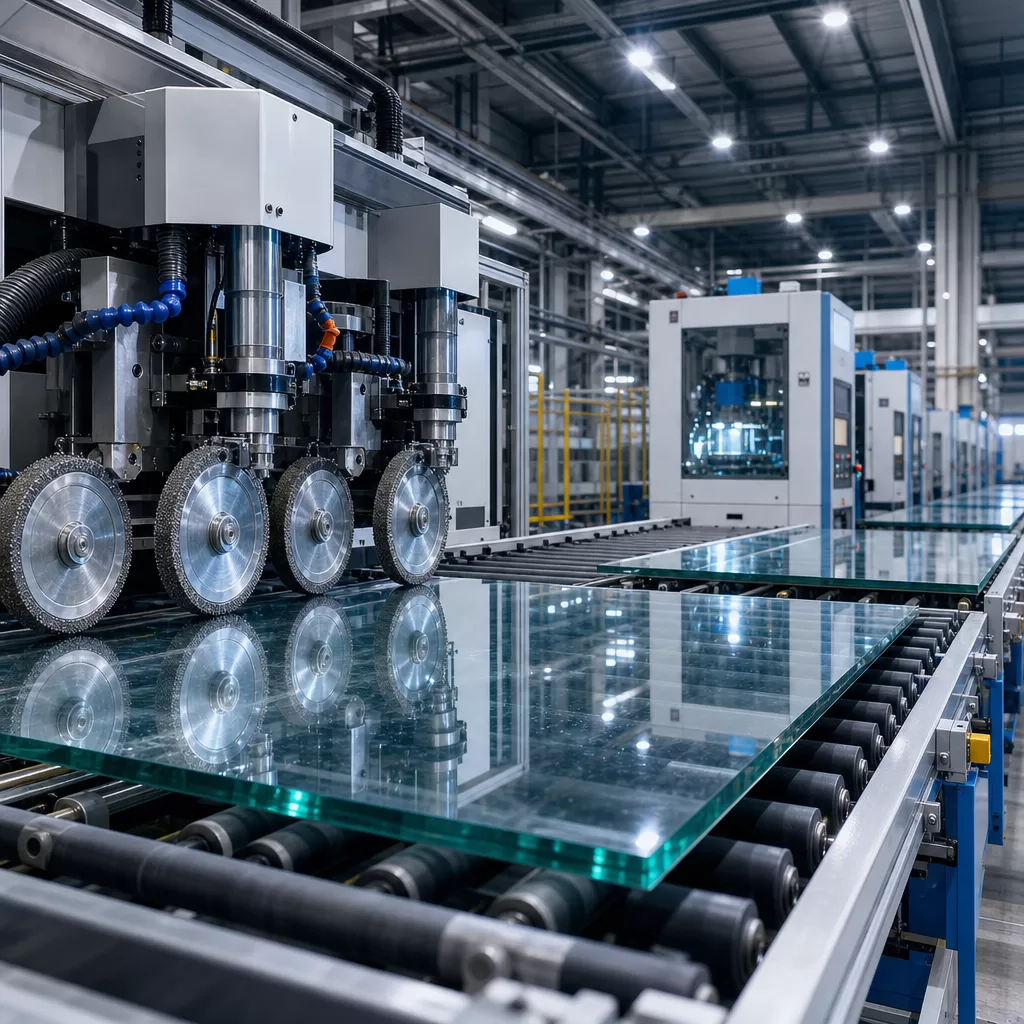
The Core Physics Behind Shaping Fragile Materials
Applying mechanical force to an amorphous solid always initiates a fracture. Operators must guide this split along a predetermined, exact path. Heavy equipment provides the exact pressure required for this microscopic accuracy. Controlling the break ensures a clean initial edge.
Subsequent steps involve removing sharp edges without introducing deep fissures. Diamond-infused wheels grind against the raw edge, creating a smooth surface. Proper coolant flow prevents localized overheating, which would otherwise compromise the structural strength. The substrate remains chemically stable throughout.
The abrasive tools rely on a careful balance of material hardness. Glass sits midway on the hardness scale, while industrial diamonds represent the peak. The metal or resin matrix holding these diamonds must wear away evenly. This erosion exposes fresh, sharp cutting edges continuously.
Final polishing stages utilize compounds like cerium oxide to restore optical clarity. The mechanical friction combines with a subtle chemical reaction. This dual action removes microscopic scratches left by the previous rough grinding stages. The resulting edge is both safe and visually perfect.
Tracing the Transition from Manual Crafting to Automation
Early workshops relied heavily on human muscle and intuition. Artisans manually scored sheets and snapped them, a process fraught with inconsistency. Yield rates were unpredictable, and large-scale architectural projects faced severe supply bottlenecks. The industry desperately needed standardized, repeatable solutions.
The introduction of motorized spindles marked a distinct turning point. Mechanized grinding allowed for repeatable edge profiles, drastically reducing material waste. Factories could finally predict their daily output with reasonable certainty. Physical strain on the workforce decreased significantly.
Numerical control systems later replaced rigid mechanical jigs entirely. Software began dictating the movement of grinding heads across multiple spatial axes. This shift enabled complex geometric shapes, answering the architectural demand for curved and bespoke panels. Complex processing became routine.
Today, integration across the factory floor eliminates isolated work zones. Conveyor belts link cutting tables directly to edging lines and washing stations. A sheet of raw material rarely requires human lifting until the final inspection. This continuous flow maximizes daily throughput volume.
Categorizing Modern Processing Technologies
Industrial workflows generally divide into two distinct operational phases. The first phase involves altering the physical dimensions through abrasion or cutting. This is universally known as cold processing within the trade. The material remains at room temperature during these steps.
The second phase modifies the internal tension state through severe temperature fluctuations. Hot processing fundamentally changes the mechanical properties of the substrate. Equipment used in this phase consumes significant energy and requires large installation footprints. Safety and durability are the primary goals here.
Understanding the specific function of each machine prevents costly misapplications. Facility managers must pair the right technology with their daily production demands. The table below outlines the core categories found in a standard fabrication plant.
| Equipment Category | Primary Function | Core Technology | Common Yield Issues |
|---|---|---|---|
| Straight-line Edgers | Edge profiling and polishing | Multi-spindle diamond wheels | Chipping, uneven polish |
| CNC Workcenters | Routing, drilling, and milling | Multi-axis interpolated movement | Tool wear, positioning drift |
| Tempering Furnaces | Inducing surface compression | Convective heating and quenching | Optical distortion, roller wave |
| Washing Machines | Removing abrasive dust and oils | High-pressure air knives and brushes | Water spots, surface scratching |
The Mechanics of Precision Glass Drilling
Creating holes in a brittle substrate introduces massive localized stress concentrations. Traditional drill bits used for metal or wood will shatter a glass pane instantly. Specialized hollow core drills equipped with diamond rims are required to remove a solid cylinder of material.
The drilling process relies on two opposing bits meeting in the center. The bottom bit drills up to half of the glass thickness first, followed by the top bit completing the cut. This alternating action prevents the blowout of the rear surface upon exit. Alignment between the two spindles must remain absolutely perfect.
Coolant delivery during drilling is notoriously difficult but completely essential. Water must flow directly through the hollow center of the drill bit to flush out debris. If the core gets stuck inside the bit, friction spikes and the glass shatters immediately. Regular extraction of these cores prevents catastrophic breakage.
Identifying Bottlenecks in Production Lines
Managers frequently struggle with unexpected downtime on the factory floor. A sudden drop in yield often stems from subtle misalignments in the production line. Even a fraction of a millimeter variance in spindle positioning causes severe edge defects. Regular calibration is absolutely mandatory.
Coolant systems are another notorious source of hidden operational inefficiencies. When glass dust accumulates in the water supply, it creates an abrasive slurry. This contaminated fluid accelerates tool wear and degrades the final polished finish. Clean water is the lifeblood of cold processing.
Another significant bottleneck occurs right before the tempering phase. If a washing machine fails to remove all cutting oils, the debris burns into the glass. This creates permanent visual defects during the intense heating cycle. The washing speed must match the furnace capacity.
Operators must establish rigorous, proactive maintenance schedules to avoid shutdowns. Monitoring the electrical load on grinding motors can predict bearing failures early. Preemptive parts replacement keeps the heavy glass machinery running continuously. Waiting for a catastrophic failure destroys tight delivery schedules.
Mitigating Surface Distortion During Heating
Tempering glass involves heating the pane to a plastic state before rapid cooling. This quenching process creates a strong outer compression layer over a tensioned core. However, resting hot, pliable glass on ceramic rollers often induces physical deformations. Manufacturers call this common defect roller wave.
Roller wave causes visual distortion, making building facades look like funhouse mirrors. Reducing this effect requires precise control over the oscillating speed of the furnace bed. If the glass stops moving for even a second, the rollers create permanent indentations. Continuous, fluid motion preserves optical clarity.
Another thermal defect involves anisotropy, which creates visible iridescent patterns under polarized light. These dark spots appear when the quenching air nozzles apply uneven cooling pressure. Advanced quenching arrays use variable air baffles to distribute the cooling blast perfectly. This minimizes strain marks and satisfies strict architectural aesthetic standards.
Strategic Selection for Diverse Application Scenarios
Selecting appropriate machinery requires a thorough audit of the intended end product. A facility producing automotive windshields has vastly different needs than one manufacturing shower enclosures. The equipment must align precisely with the specific dimensional tolerances required by the client.
Capital expenditures in this sector represent a massive financial commitment. Buying an overpowered machine for simple tasks degrades the return on investment. Conversely, under-equipped lines will struggle to meet stringent architectural building codes. Careful analysis prevents these expensive strategic errors.
When evaluating facility upgrades, production managers should analyze these primary operational parameters carefully. Matching the hardware to the specific workflow prevents daily operational friction.
- Spindle Configuration: Dictates the complexity of edge profiles, ranging from simple flat edges to complex pencil or beveled designs.
- Conveyor Stability: Ensures heavy, oversized architectural panels move through the grinding zones without vibrating or shifting.
- Water Filtration Capacity: Determines how effectively glass particulates are removed, which directly impacts diamond wheel longevity.
- Software Compatibility: Governs how seamlessly the local machine interfaces with central factory management systems.
- Energy Consumption Profiles: Highlights the long-term utility costs, especially critical for high-draw machinery like tempering furnaces.
Assessing the Role of Edge Quality in Structural Glazing
Structural glazing applications demand flawless edge preparation prior to final assembly. When glass panels are suspended by point-fixed hardware, the drilled holes bear immense wind loads. Any microscopic chip left behind by a dull drill bit becomes a critical failure point. High-quality grinding eliminates these invisible stress risers entirely.
Similarly, exposed edges on frameless glass doors require exceptional physical polishing. The edge must not only be safe to touch but also visually transparent. Multi-stage edging machines utilize felt wheels and specialized oxide slurries to achieve a mirror-like finish. This aesthetic perfection commands a premium price in the architectural market.
The relationship between edge strength and thermal shock resistance is frequently underestimated. A poorly ground edge will fracture easily if exposed to sudden temperature drops. Proper seaming removes the fragile micro-cracks along the perimeter of the cut sheet. This simple processing step saves thousands of dollars in tempered glass breakage.
Evaluating the Impact of Technical Support Networks
Originating in the 1990s as a specialized manufacturer, for us, focusing on cold and hot processing systems has scaled globally. Supplying equipment to over a hundred countries reveals a universal truth about factory operations. Hardware alone cannot guarantee a profitable fabrication business.
We have observed firsthand that robust technical support mitigates unexpected production halts. When a CNC router loses its axis calibration, local maintenance teams need immediate diagnostic assistance. Access to extensive technical resources prevents a minor glitch from becoming a week-long shutdown.
Human resource training is equally critical to the lifespan of the equipment. A highly advanced edging machine will fail rapidly if operators ignore daily cleaning protocols. Investing in comprehensive staff education yields higher returns than simply buying faster motors. Knowledge remains the best operational asset.
Examining Shifts Toward Data-Driven Operations
Modern fabrication facilities are moving rapidly away from isolated, analog workstations. Sensors embedded within the spindles now track vibration and temperature in real-time. This live data feeds into centralized dashboards, allowing managers to monitor overall equipment effectiveness accurately.
Predictive algorithms analyze the friction data to estimate remaining tool life. Operators no longer replace diamond wheels based on arbitrary time schedules. They perform changeovers exactly when the abrasive layer reaches its absolute functional limit. This precision reduces consumable waste dramatically.
Energy consumption is also under intense scrutiny across the industrial sector. Variable frequency drives adjust motor speeds based on the actual load required at any second. This dynamic power management reduces electricity costs without sacrificing the material removal rate. Efficiency drives modern engineering.
Furnace designs now utilize intelligent convection profiles to handle complex coatings. Standard radiation struggles to heat low-emissivity glass efficiently, as the coating reflects the heat. Targeted air streams force heat into the substrate, ensuring a uniform temperature distribution before quenching.
Frequently Addressed Technical Misconceptions
Many new operators carry fundamental misunderstandings regarding machine calibration. These cognitive biases often lead to suboptimal production choices and damaged substrates. Addressing these misconceptions directly improves both factory safety and daily operational efficiency.
Q: Does increasing spindle pressure result in a faster processing speed?
Applying excessive pressure does not increase material removal rates at all. It actually glazes the diamond wheel and causes micro-fractures along the fragile glass edge. Optimal processing speed relies on a balanced feed rate and sharp, well-maintained abrasives.
Q: Are all tempering furnaces capable of handling low-emissivity coatings?
Standard radiation furnaces struggle to heat low-E glass efficiently. The specialized coating intentionally reflects the radiant heat away from the surface. Convection-based heating systems are completely mandatory to bypass this reflection and heat the substrate evenly.
Q: Can water filtration systems be bypassed for short production runs?
Bypassing filtration immediately circulates abrasive glass dust into the sensitive cooling lines. This dense slurry destroys water seals and prematurely degrades the expensive grinding tools. Clean coolant is structurally vital for every single operating minute, regardless of the batch size.
Operating a profitable fabrication plant requires balancing mechanical precision with continuous workflow management. Selecting the correct glass machinery dictates the baseline capabilities of your entire operation. Careful attention to tooling, preventive maintenance, and operator training ensures long-term commercial viability. Mastering glass processing equipment transforms raw materials into safe, durable architectural elements.
CONTACT US


LIAODA (LAD) Glass Machinery Co., Ltd.
We are always providing our customers with reliable products and considerate services.
If you would like to keep touch with us directly, please go to contact us
-
![Home]()
Home
-
![Tel]()
Tel
-
![Email]()
Email
-
Share
-
![Contact]()
Contact


